On-Demand Manufacturing for Small Business: No MOQs, No Warehousing
The MOQ is manufacturing’s version of “Sorry, you’re too small to matter.”
You need 15 brackets. The supplier quotes you for 500. You need a replacement gear for a machine that stopped running Tuesday. The manufacturer wants a 12-week lead time and a $5,000 minimum. You need 30 custom enclosures for a product launch. Every shop you call asks when you’ll be ready for “production volumes.”
This is life for small businesses trying to get parts made in Canada. The entire traditional manufacturing system is built around scale. If you don’t have it, you either overpay, overorder, or go without.
On-demand manufacturing kills this equation. Order 1 unit. Order 1,000. Same process. Same quality. No minimums. No warehousing. Parts in your hands in 3-5 business days.
This isn’t a workaround. It’s the model the industry is shifting toward. The global on-demand manufacturing market is growing from $5.97 billion to $24.79 billion by 2034. And the businesses benefiting most aren’t the ones with massive purchasing departments. They’re the small operations that couldn’t access manufacturing at all under the old rules.
The Small Business Manufacturing Problem
If you run a small business that needs physical parts, you already know the obstacles. Whether you make products, maintain equipment, or build prototypes, the system wasn’t built for you.
Minimum order quantities that ignore your reality
Traditional manufacturers set MOQs because their economics demand it. Tooling costs, setup time, and material minimums mean they need large runs to turn a profit. A 500-unit minimum on injection-molded parts isn’t arbitrary. It’s the math of amortizing a $15,000 mold.
But your math is different. You need 20 parts. Maybe 50. The MOQ forces you to buy 10x what you need, tie up capital in excess inventory, and rent space to store it all. The Canadian Federation of Independent Business reports that cash flow is the top concern for small business owners in Canada. Ordering 500 units when you need 50 makes that problem worse.
Small businesses overpay 40-60% on inventory they’re forced to buy through MOQ requirements. That’s not a manufacturing cost. That’s dead capital sitting on a shelf. Read more about how carrying costs eat your margins.
Lead times that kill momentum
You have a product idea. You find a manufacturer. They quote 8-12 weeks. By the time the parts arrive, the market opportunity has shifted, your cash has been tied up for three months, and your competitor launched something similar last week.
For overseas manufacturing, add customs clearance, shipping delays, and the chaos of international logistics. A “6-week” timeline from China regularly becomes 10-14 weeks. Canadian businesses are already eliminating these delays with local production.
Small businesses live and die by speed. Long lead times aren’t inconvenient. They’re competitive disadvantages baked into your supply chain.
No negotiating power
Large buyers get attention, priority scheduling, and volume discounts. Small buyers get the leftover capacity, the longest lead times, and the highest per-unit prices.
When a shop has to choose between a 10,000-unit order and your 25-unit order, you’re not getting the call back.
Overseas dependency by default
For many small businesses, the only affordable manufacturing option has been overseas. Domestic shops either won’t take the small order or price it out of reach. So the work goes to China, Vietnam, or India. That introduces currency risk, quality control challenges, shipping delays, and zero recourse if something goes wrong.
The Canadian Manufacturers & Exporters association notes that over 90% of Canadian manufacturers are small businesses. The irony: most of them struggle to find other Canadian manufacturers willing to make their parts.
What On-Demand Manufacturing Changes
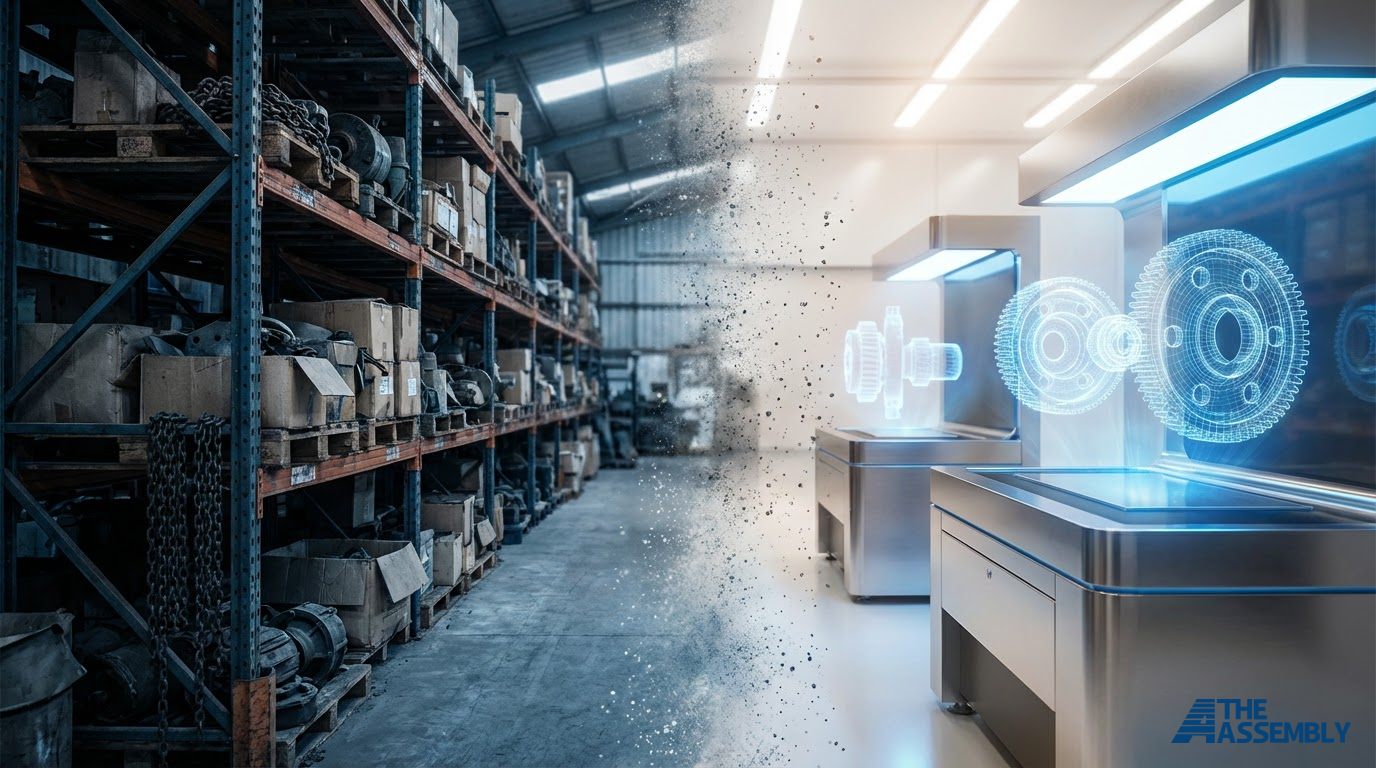
On-demand manufacturing uses digital production technologies that are economical at any volume. CNC machines, industrial 3D printers, and laser cutters don’t care if you’re making 1 part or 1,000. The setup is digital. The tooling is a file. The economics work at every quantity.
Here’s what that means for your business:
Zero MOQ. Need 1 part? Order 1. Need 7? Order 7. There’s no minimum because the production process doesn’t require one. No tooling to amortize. No setup cost that demands volume to justify.
3-5 day delivery. Not 8-12 weeks. Not “we’ll fit you in next month.” Digital manufacturing equipment starts producing the moment your order is confirmed. Local production within a 200km radius means parts ship fast.
No warehousing. You order what you need, when you need it. Nothing sits in a back room aging, tying up cash, collecting dust. Your digital inventory is a CAD file stored securely in the cloud. It takes up zero square feet and costs nothing to hold. Learn why this beats traditional warehousing on every metric.
Same process at every scale. The process for ordering 3 units is identical to the process for ordering 300. Upload your file. Get a quote. Approve. Receive parts. Whether you’re prototyping or fulfilling orders, you use the same system.
Canadian production. Parts made in Canada, by vetted Canadian manufacturers, delivered within Canada. No customs. No tariffs. No international shipping uncertainty.
Real Scenarios Where Small Businesses Benefit
On-demand manufacturing isn’t theoretical. Here are five situations where small businesses use it every week.
1. Replacement parts for equipment you can’t source anymore
Your CNC lathe is 15 years old. A plastic feed guide cracked. The original manufacturer was acquired, then dissolved. The part number returns zero results from every distributor.
In the traditional world, this means one of three things: buy a new machine ($50,000+), find a machinist willing to reverse-engineer the part (if you can find one with availability), or shut down that production line.
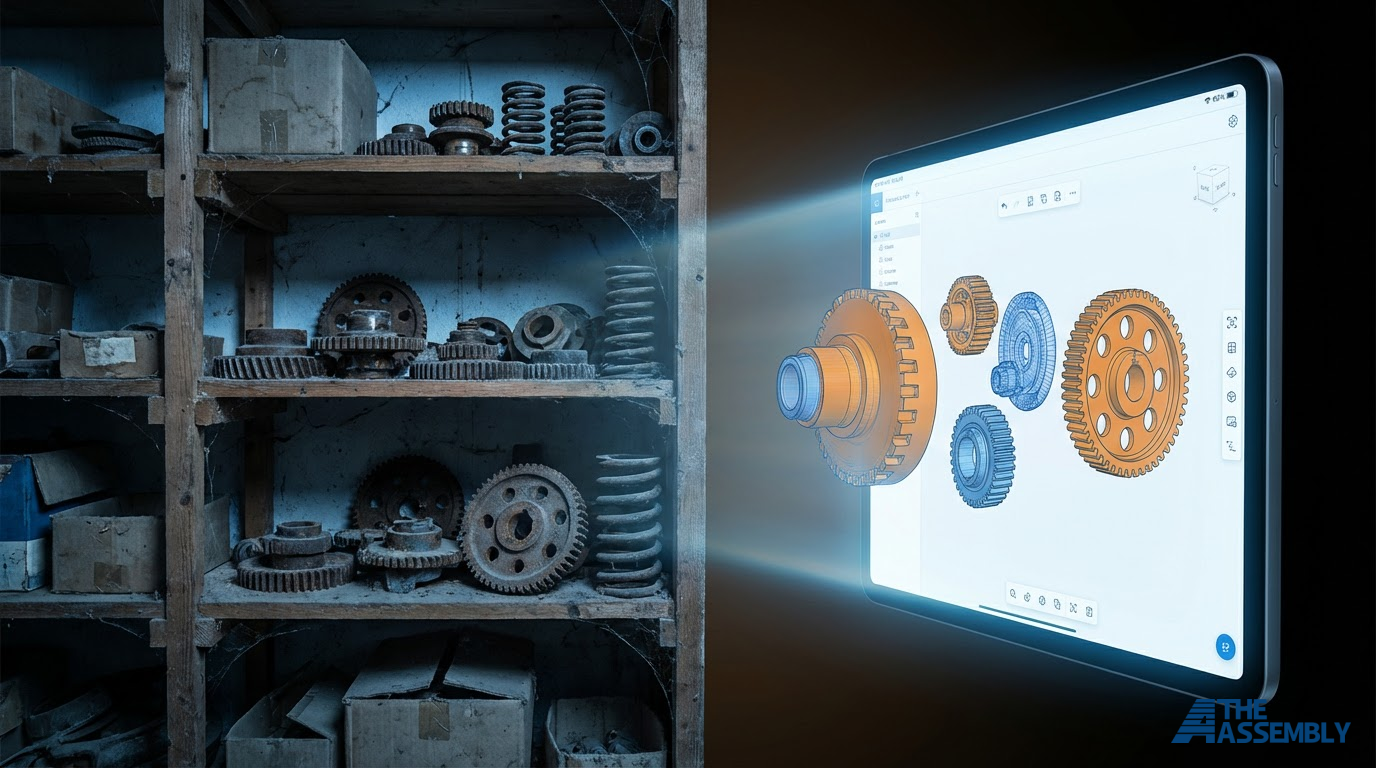
With on-demand manufacturing, you send the broken part in for 3D scanning. The scan produces a verified CAD model. That model becomes your permanent digital file. The replacement part ships in 3-5 days. And the next time it breaks, you reorder from the same file. No scrambling.
2. Product prototyping and iteration
You’re designing a new product. The first version needs testing. You print 5 units, test them, find two problems, revise the design, and print 5 more. Traditional manufacturing would quote you 500 units of a design that hasn’t been validated yet.
On-demand lets you iterate at the speed of your design cycle. Change the wall thickness on Monday, have new parts by Thursday. You’re spending $200 on 5 test units instead of $20,000 on a mold for an unproven design. If you’re in Atlantic Canada, check out our rapid prototyping guide for the Maritime provinces.
3. Small batch production runs
Your Etsy shop sells custom phone stands. You move 40-60 units per month. No injection molding company will talk to you. But those 40-60 units represent a real business generating real revenue.
On-demand manufacturing serves this market directly. Order 50 units this month. Order 70 next month if sales pick up. Order 30 if they slow down. Your production matches your demand exactly. No overstock. No stockouts. No guessing.
4. Custom and personalized products
A client wants their company logo on a mounting bracket. Another wants a slightly different dimension on an existing part. A third needs a left-hand version of a right-hand component.
In traditional manufacturing, customization means new tooling, new setups, new MOQs for each variation. In on-demand manufacturing, customization is a file edit. Change the CAD model, produce the custom version, ship it. The cost difference is minimal because the production process is the same. Personalized products, made-to-measure components, customer-specific modifications. All at quantities of 1.
5. Legacy part reproduction
You maintain vintage equipment, restore vehicles, or support older building systems. The parts haven’t been manufactured in decades. Nobody stocks them. The original drawings are gone.
On-demand manufacturing combined with 3D scanning can reproduce virtually any part from a physical sample. Scan the original (or even a broken original), model it in CAD, and produce exact replicas using appropriate materials. This applies to everything from antique machinery components to discontinued appliance parts.
The Cost Reality
Let’s be direct about pricing. This is where most small business owners have reasonable skepticism.
Yes, the per-unit cost of on-demand manufacturing is higher than bulk production.
A part that costs $8/unit in a batch of 5,000 will cost $25/unit when you order 10. That’s the math. Anyone who tells you otherwise is lying.
But here’s the math that actually matters:
Scenario: You need 10 brackets
| Bulk Order (500 MOQ) | On-Demand Order | |
|---|---|---|
| Units purchased | 500 at $8 = $4,000 | 10 at $25 = $250 |
| Units you actually need | 10 | 10 |
| Carrying cost on excess | $980/year (25% on 490 units) | $0 |
| Estimated obsolescence | 30% of unused stock | $0 |
| Real cost per bracket you needed | ~$40 each | $25 each |
The “expensive” option saves you $3,750 in cash outlay and eliminates 490 parts you didn’t need. Those carrying costs compound every year the parts sit on your shelf.
This math holds across nearly every low-volume scenario. The per-unit premium disappears when you stop buying inventory you won’t use. And for many small businesses, the cash flow difference is the difference between funding growth and funding a shelf full of parts.
The honest framework: if you’ll use 500 units within a year, bulk ordering makes sense. If you need 50 or fewer, on-demand almost certainly costs less in total.
How It Works: Four Steps
The process is simpler than most people expect.
Step 1: Upload your design file
Submit a CAD file (STEP, STL, IGES, or native formats) through the platform or directly to the manufacturing team. No CAD file? Send in a physical part or a detailed drawing for digitization.
Step 2: Get a quote
You receive pricing based on material, manufacturing method, quantity, and timeline. No hidden setup fees. No tooling charges. The quote for 1 unit and the quote for 100 units use the same transparent pricing structure.
Step 3: Approve and produce
Confirm the order. Production begins immediately on digital manufacturing equipment. No waiting for tooling. No queue behind larger orders.
Step 4: Receive your parts
Delivery in 3-5 business days for most parts. Produced locally within Canada, within a 200km production radius where possible.
That’s it. No purchase orders with 6-month lead times. No negotiating MOQs. No customs paperwork.
Check our on-demand manufacturing guide for a deeper look at the technologies and processes involved.
What You Can Manufacture On Demand
Not every manufacturing method works for on-demand production. The ones that do share a common trait: they’re controlled by digital files, not physical tooling.
CNC Machining
- Best for: Metal parts, tight tolerances, structural components
- Materials: Aluminum, steel, stainless steel, brass, titanium, plastics
- Tolerances: +/- 0.025mm
- Typical use: Brackets, housings, shafts, fittings, replacement machine parts
3D Printing (FDM, SLS, SLA, MJF)
- Best for: Complex geometries, prototypes, low-stress functional parts, production runs in nylon
- Materials: PLA, ABS, PETG, Nylon (PA12, PA11), resin, TPU
- Tolerances: +/- 0.1mm to 0.5mm depending on process
- Typical use: Enclosures, jigs, fixtures, product prototypes, custom brackets, snap-fit parts
For businesses in PEI and Atlantic Canada, we have local 3D printing and manufacturing capabilities in Charlottetown.
Laser Cutting
- Best for: Flat profiles, panels, gaskets, decorative elements
- Materials: Steel, aluminum, acrylic, wood, leather
- Tolerances: +/- 0.1mm
- Typical use: Signage, mounting plates, custom gaskets, enclosure panels
CNC Turning
- Best for: Cylindrical and rotational parts
- Materials: Metals and plastics
- Tolerances: +/- 0.025mm
- Typical use: Shafts, bushings, standoffs, pins, threaded components
Sheet Metal Fabrication
- Best for: Enclosures, chassis, brackets at moderate volumes
- Materials: Steel, aluminum, stainless steel
- Typical use: Electronic enclosures, equipment guards, mounting systems
The right method depends on the part. A good manufacturing partner recommends the best process for your requirements. Not pushes everything through a single machine.
Getting Started: What You Need
You don’t need a manufacturing background to use on-demand manufacturing. Here’s what you actually need.
If you have a CAD file
You’re ready. Upload the file and get a quote. Common formats: STEP (.stp), STL, IGES (.igs), SolidWorks (.sldprt), Fusion 360 (.f3d). Make sure the file represents the final geometry you want produced.
If you have a drawing or sketch
A detailed 2D drawing with dimensions can be converted to a 3D CAD model. The manufacturing team can work from engineering drawings, even hand-drawn ones if they’re dimensioned clearly.
If you only have a physical part
Send it in. It gets 3D scanned with industrial-grade equipment (accuracy to 0.05mm), and the scan data becomes a production-ready CAD model. This works for reverse engineering discontinued parts, digitizing legacy equipment components, or replicating anything from a physical sample.
If you have nothing but an idea
Describe what you need the part to do. A design engineer can take you from concept to CAD. Common for product startups and small businesses creating something new.
The barrier to entry is lower than you think. You need a part. The manufacturing partner handles the rest.
FAQ
How much does on-demand manufacturing cost compared to traditional manufacturing?
Per-unit cost is higher than bulk production. A part that costs $8/unit at 5,000 quantity will cost $20-30/unit at quantities under 50. But the total cost is almost always lower for small businesses because you’re not paying for inventory you don’t need, warehousing, or obsolescence. For any order under a few hundred units, on-demand usually wins on total spend.
Can I really order just one part?
Yes. One unit is a real order. There is no minimum order quantity. The digital manufacturing process doesn’t require batch sizes to be economical. You pay for exactly what you order.
How fast can I get parts?
Most parts ship within 3-5 business days from order confirmation. Simple parts on standard materials can be faster. Complex parts requiring multiple operations or specialty materials take slightly longer. Compare that to 8-12 weeks from traditional manufacturers and 6-14 weeks from overseas suppliers.
Do I need to provide a CAD file?
A CAD file is the fastest path to production. But it’s not required. You can provide engineering drawings, sketches with dimensions, or a physical part for 3D scanning and reverse engineering. If you’re starting from scratch, design services can take you from concept to production-ready file.
What if my part needs specific material or quality standards?
On-demand manufacturing supports a wide range of engineering-grade materials and can meet tight tolerances (as precise as +/- 0.025mm for CNC machining). Material certifications, first article inspections, and quality documentation are available. Discuss your specific requirements during the quoting process.
Stop Paying the Small Business Tax on Manufacturing
The traditional manufacturing system charges you a premium for being small. Higher per-unit costs. MOQs that force you to over-buy. Lead times that assume you can wait. Overseas dependency because nobody local will take your order.
On-demand manufacturing eliminates every one of those penalties.
Order what you need. Get it in days. Pay only for what you use. Keep your capital in your business instead of on a warehouse shelf.
The infrastructure exists. The technology is proven. The economics work at your scale.
Two ways to take the next step:
Run the numbers. Use our ROI Calculator to see what you’re spending on over-ordered inventory and what on-demand production would cost instead.
Talk to us directly. Book a 15-minute call with our team. Tell us what you need made, and we’ll tell you exactly how we’d produce it, what it would cost, and how fast you’d have it. No minimums on the conversation either.