On-Demand Manufacturing in Canada: Complete Guide
The traditional manufacturing playbook is built on a bet: that you can predict demand.
Most manufacturers lose that bet.
They forecast volumes six months out. They commit to minimum order quantities of 500 or 5,000. They fill warehouses with stock they hope will move. And when demand shifts (it always does), they eat the cost. Write-offs. Dead inventory. Capital locked on shelves doing nothing.
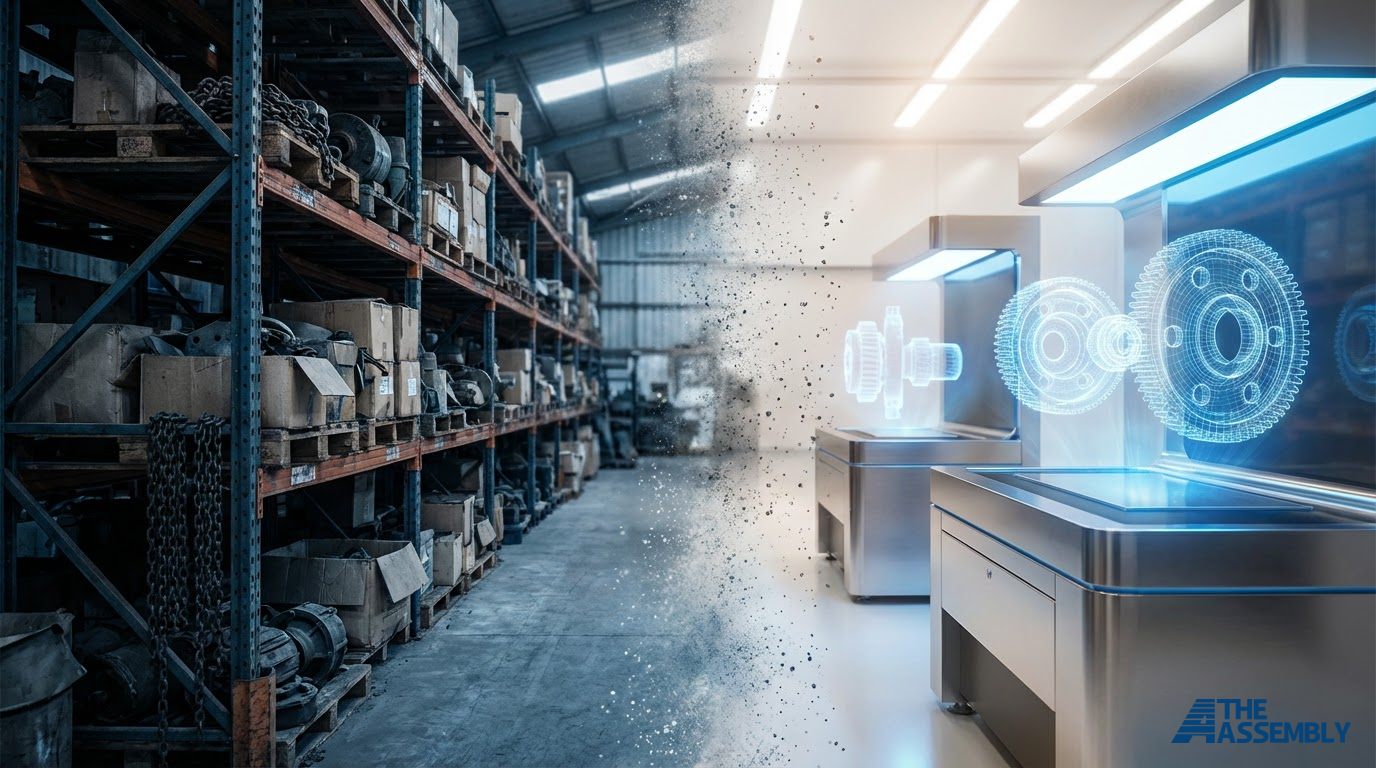
On-demand manufacturing eliminates that bet entirely. You produce what you need, when you need it. Nothing more. Nothing sits. Nothing expires.
This is a $5.97 billion global market growing at 15.3% annually, projected to hit $24.79 billion by 2034. The shift is real. And Canadian manufacturers have a structural advantage most haven’t realized yet.
What Is On-Demand Manufacturing?
On-demand manufacturing (also called make-to-order or production-on-demand) produces parts only after a customer places an order. No forecasting. No speculative production runs. No warehousing finished goods.
Traditional model: Forecast. Produce. Store. Wait. Hope demand shows up. Ship.
On-demand model: Order received. Produce. Ship.
The difference is financial, not just operational. Traditional manufacturing ties up capital in speculative inventory. You’re paying to store things you might never sell. On-demand converts that fixed investment into variable cost that only happens when revenue is already guaranteed.
On-demand manufacturing: production triggered by actual orders, not forecasts. Parts manufactured and shipped in days, not warehoused for months.
For procurement professionals and operations leaders, this means zero minimum order quantities, zero carrying costs, and lead times measured in days instead of months.
How On-Demand Manufacturing Works
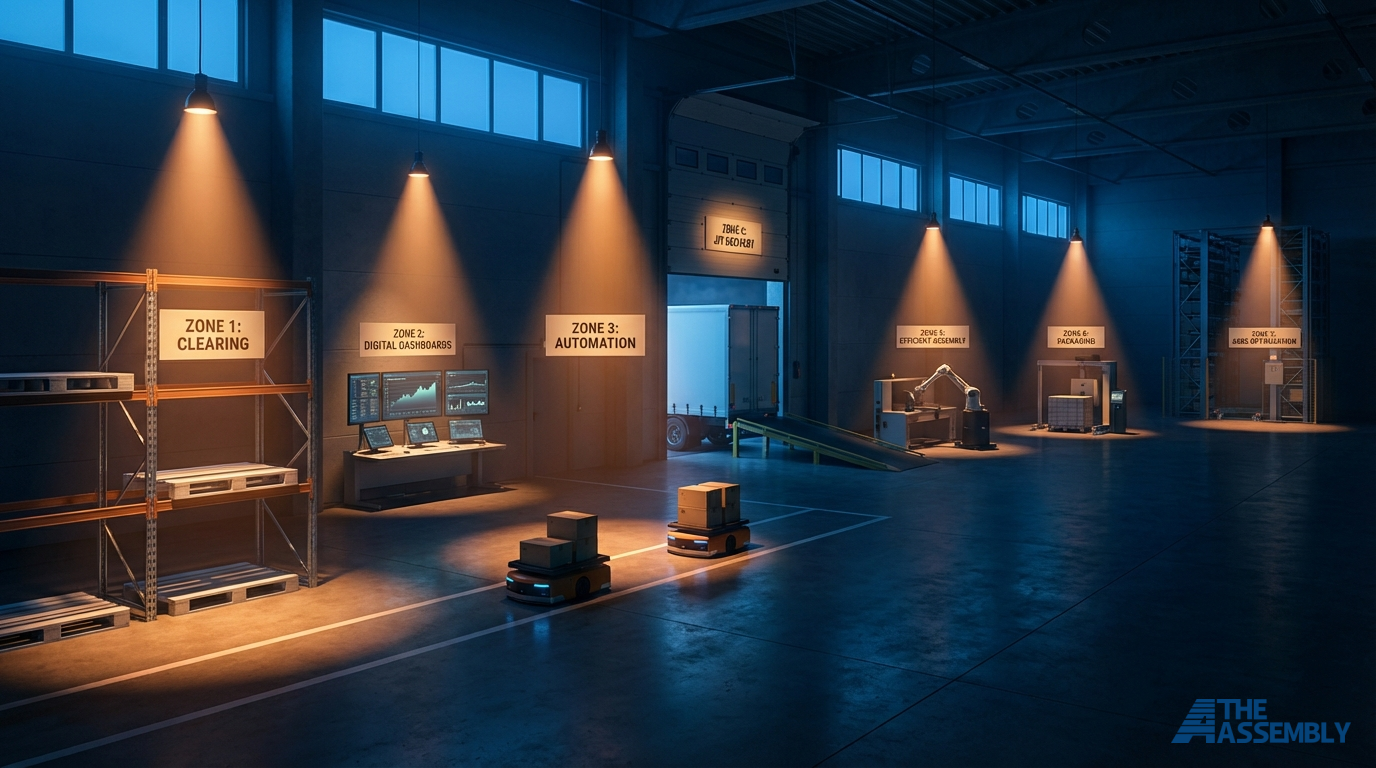
Five steps. No warehouses involved.
Step 1: Upload a CAD file
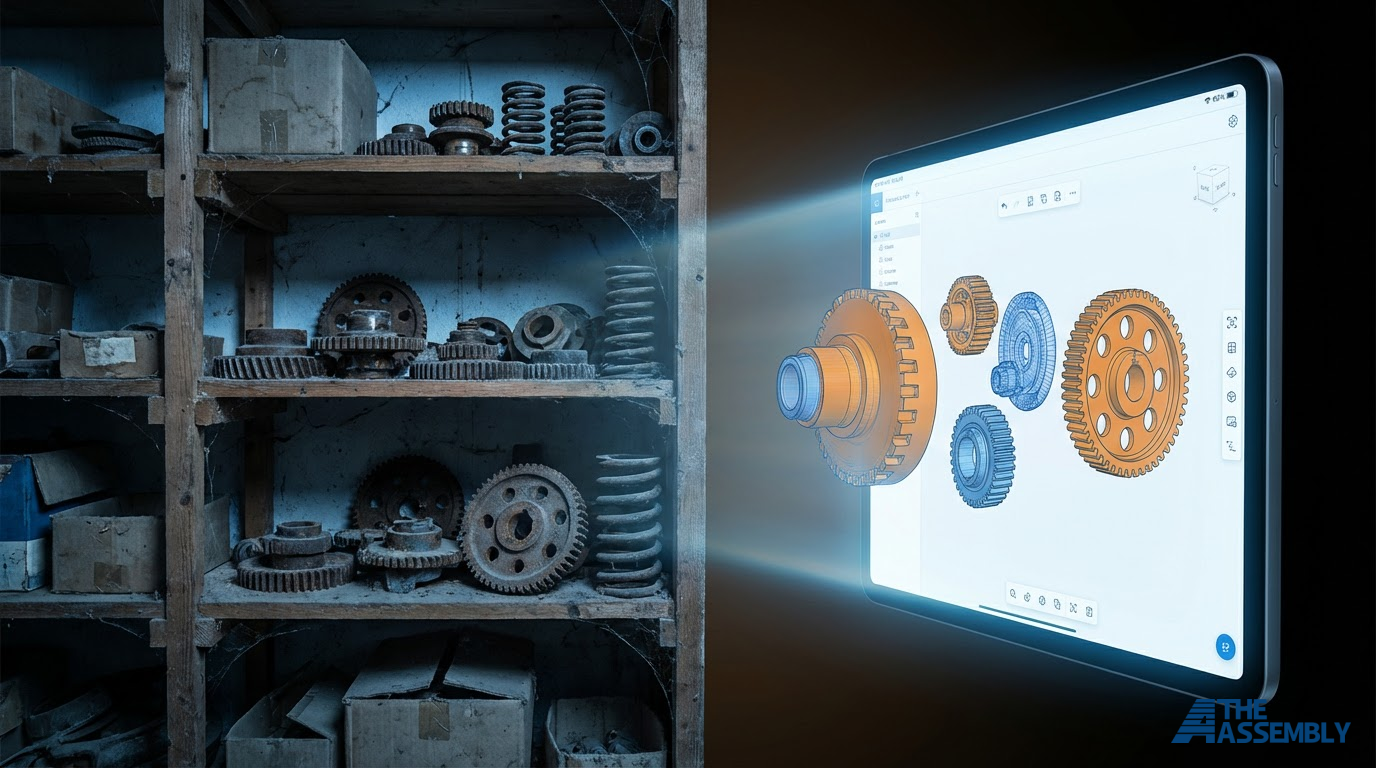
Every on-demand production run starts with a digital design file. STEP, IGES, STL, or native CAD formats. This file contains everything needed to manufacture the part: geometry, dimensions, tolerances.
No CAD file? The part can be reverse engineered from a physical sample using industrial 3D scanning (accuracy to 0.05mm) and converted to a production-ready model.
Step 2: Select materials and process
Based on the part’s requirements (material, tolerances, surface finish, volume), the right manufacturing method is selected. CNC machining for tight-tolerance metals. SLS printing for complex nylon geometries. Laser cutting for flat profiles. The digital file is the constant. The production method is the variable.
Step 3: Order routes to production
In a distributed manufacturing network, the job routes to the optimal facility based on capability, capacity, and proximity to the delivery address. No central factory bottleneck.
Step 4: Manufacturing and quality verification
The part is produced, inspected against specifications, and documented. Digital manufacturing is highly repeatable. Once a part is qualified, consistency is built into the process.
Step 5: Direct shipment
The finished part ships directly to you. In a distributed network like The Assembly’s, production happens within 200km of your delivery address. Typical turnaround: 3-5 business days from order to delivery.
No part sits between steps 3 and 5. It doesn’t exist until someone needs it.
On-Demand vs Traditional Manufacturing
The comparison is not about unit price. It’s about total cost of ownership.
| Factor | Traditional Manufacturing | On-Demand Manufacturing |
|---|---|---|
| Production trigger | Demand forecast | Actual customer order |
| Minimum order quantity | 500-10,000 units typical | 1 unit. Zero MOQ. |
| Lead time | 8-16 weeks (overseas), 4-8 weeks (domestic batch) | 3-5 business days |
| Inventory required | Large safety stock + buffer | Zero. Produce on order. |
| Carrying costs | 20-30% of inventory value per year | $0 |
| Capital tied up | Significant (purchase + store + insure) | Minimal (pay per part) |
| Obsolescence risk | High (parts go stale, designs change) | None (digital files update instantly) |
| Tooling investment | $10K-$100K+ for molds and fixtures | Zero for most digital methods |
| Unit cost | Lower at high volumes | 10-30% higher per unit |
| Total cost of ownership | Often higher when carrying costs included | Often lower for low-to-mid volume |
| Design change speed | Weeks to months (retooling) | Hours (update CAD file) |
The unit cost line is where most people stop reading. That’s a mistake.
A part that costs $50 in a batch of 100 and sits in your warehouse for two years at 30% annual carrying cost has an effective cost of $80. The same part produced on demand for $65 when a customer actually orders it saves you $15 per unit. And you never bought the 87 units nobody wanted.
Manufacturing Methods Available On-Demand
On-demand manufacturing is not limited to 3D printing. That’s the most common misconception. The term covers any computer-controlled production method that runs directly from a digital file without dedicated tooling.
CNC Machining
Computer-controlled subtractive manufacturing. A cutting tool removes material from a solid block to create the finished part.
- Tolerance: +/- 0.025mm
- Materials: Aluminum, steel, stainless steel, titanium, brass, copper, engineering plastics
- Best for: Tight-tolerance metal parts, high-stress applications, production-quality surface finishes
- Volume sweet spot: 1 to 5,000 units
CNC machining handles the broadest range of on-demand work. Multi-axis (4- and 5-axis) CNC expands capability to complex geometries that would require multiple setups on a 3-axis machine.
3D Printing (Additive Manufacturing)
Builds parts layer by layer from digital files. Multiple technologies serve different applications.
Selective Laser Sintering (SLS)
- Nylon powder fused by laser
- Complex geometries with no support structures needed
- Production-grade mechanical properties
- Tolerance: +/- 0.3mm
- Best for: Functional parts, small production runs, complex shapes
Fused Deposition Modeling (FDM)
- Thermoplastic filament extruded layer by layer
- Widest material range (ABS, PETG, Nylon, PC, ULTEM)
- Largest build volumes available
- Tolerance: +/- 0.5mm
- Best for: Prototypes, jigs, fixtures, large parts
Stereolithography (SLA)
- UV laser cures liquid resin
- Excellent surface finish and fine detail
- Tolerance: +/- 0.1mm
- Best for: High-detail parts, visual prototypes, patterns for casting
Multi Jet Fusion (MJF)
- HP technology using binding agents and heat
- Fast throughput for production volumes
- Consistent mechanical properties across build
- Tolerance: +/- 0.3mm
- Best for: Production-grade nylon parts, medium batch runs
Laser Cutting
Fiber or CO2 lasers cut flat sheet material with precision.
- Tolerance: +/- 0.1mm
- Materials: Steel, aluminum, stainless, acrylic, wood, composites
- Best for: Flat profiles, gaskets, brackets, enclosure panels, signage
- Speed: Fast turnaround with minimal setup
Sheet Metal Fabrication
Laser cutting combined with CNC bending, forming, and welding.
- Best for: Enclosures, chassis, brackets, structural components
- Digital nesting optimizes material utilization
- Quick turnaround on functional assemblies
Rapid Injection Molding
3D printed or CNC machined molds produced in days, not the 8-12 weeks typical for traditional steel tooling.
- Volume sweet spot: 50 to 10,000 units
- Best for: Bridge production between prototype and mass manufacturing
- Production-quality thermoplastics
- Mold cost: $1,000-$5,000 vs. $10,000-$100,000 for traditional tooling
The Economics: When On-Demand Beats Batch Production
Here’s where traditional procurement thinking breaks down. Most cost comparisons look at unit price alone. That’s like judging a mortgage by the monthly payment without counting the interest.
The true cost equation
Traditional manufacturing (batch of 100 parts):
- Unit production cost: $50
- Annual carrying cost: 25% of inventory value
- Average time in warehouse before sale: 2 years
- Effective cost per unit: $50 + ($50 x 25% x 2) = $75
- Units never sold (typical for long-tail parts): 15-30%
- Cost of unsold units absorbed across remaining inventory
On-demand manufacturing (same part, produced per order):
- Unit production cost: $65
- Carrying cost: $0
- Units wasted: 0
- Effective cost per unit: $65
The “expensive” on-demand option saves $10 per unit. And you never produced the 20 units nobody ordered.
Where the math gets dramatic
Spare parts with long hold times show the starkest contrast. A part sitting in inventory for 5 years at 25% annual carrying cost accumulates 125% in holding costs. That $50 part effectively costs $112.50. On-demand production at $65 saves $47.50 per unit. That’s not marginal. That’s a structural cost advantage.
The hidden savings stack
Beyond unit economics, on-demand manufacturing eliminates costs that rarely appear on a per-part P&L:
- Warehouse space: Canadian industrial rents averaged $15.11/sq ft at end of 2024. Less inventory means less rent.
- Inventory management labor: Fewer SKUs on shelves means fewer people counting, moving, and tracking them.
- Obsolescence write-offs: You cannot write off inventory you never produced.
- Safety stock buffers: When you can produce in 3-5 days, you don’t need three months of buffer stock.
- Working capital: Every dollar not locked in inventory is a dollar available for growth, debt reduction, or investment.
When traditional still wins
On-demand is not the right answer for everything. Be honest about the limitations.
High-volume stable demand: If you sell 10,000 identical widgets per month with predictable demand, batch production at scale will have lower total cost. On-demand doesn’t compete with mass production economics.
Commodity parts: Standard fasteners, washers, O-rings. Buy these in bulk from distributors.
Same-hour critical spares: If a production line part fails and every minute of downtime costs $5,000, you need that part on the shelf. Keep a small physical buffer for truly critical items. But be honest about how many parts actually fall into this category. Most companies overestimate.
On-Demand Manufacturing in Canada
Canada’s on-demand ecosystem is different from the US or European markets. Understanding those differences matters for anyone sourcing parts domestically.
The Canadian manufacturing context
Canada’s manufacturing sector contributes roughly $200 billion to GDP annually. But the structure is distinct. Over 90% of Canadian manufacturers are small businesses, according to Canadian Manufacturers & Exporters.
Most of the manufacturing capacity in this country sits in small and mid-size shops, not megafactories. That structure is actually an advantage for on-demand manufacturing. A distributed network of smaller, specialized facilities responds faster and more flexibly than a centralized operation. The infrastructure already exists. It needs to be connected.
Three forces making this urgent for Canada right now
1. The tariff environment has rewritten the rules.
65.5% of Canadian manufacturing businesses reported that US tariffs negatively impacted their operations in 2025, according to Statistics Canada. The Canadian Federation of Independent Business found that nearly 1 in 5 small businesses dealing with tariff costs won’t survive more than 6 months if conditions persist.
Parts manufactured domestically don’t cross borders. They’re not subject to tariffs. They’re not delayed by customs. For any company stung by cross-border costs, on-demand domestic production isn’t an efficiency play. It’s risk management.
2. The Buy Canadian movement has government teeth.
On December 16, 2025, the federal government implemented the Policy on Prioritizing Canadian Suppliers and Canadian Content for strategic procurement. Contracts over $25 million must now prioritize Canadian suppliers. By spring 2026, that threshold drops to $5 million. Nearly $186 million in new funding backs the policy.
Parts manufactured through a Canadian on-demand network qualify. Parts imported from overseas do not.
3. The reshoring wave is real.
40% of US companies will relocate part of their supply chains to North America by 2026, according to Deloitte. Canada is a nearshoring destination. Simultaneously, Canadian companies are reducing dependency on US and overseas suppliers.
On-demand manufacturing in Canada serves both directions. It gives US companies CUSMA-compliant Canadian production. It gives Canadian companies domestic supply chain independence.
Canadian structural advantages
Skilled trades and engineering talent. Canadian colleges and polytechnics produce a steady pipeline of CNC machinists, additive manufacturing technicians, and mechanical designers. Organizations like NGen and the National Research Council’s Advanced Manufacturing program actively expand the workforce.
Government support. The Strategic Innovation Fund, NGen’s Supercluster funding, and provincial programs provide real financial support for manufacturers adopting digital production methods.
Geographic reach. Canada is the second-largest country on Earth. Centralized manufacturing means long shipping distances. A distributed on-demand network produces close to the point of need, whether that’s Halifax, Winnipeg, or Vancouver.
Sovereignty. For defence, aerospace, and government work, Canadian-owned manufacturing networks handle work that foreign-owned platforms cannot. Controlled Goods Program (CGP) registration, ITAR compliance, and Buy Canadian procurement all require Canadian operations. This is the same sovereignty advantage that disqualifies US-owned platforms.
The Distributed Network Model
On-demand manufacturing gets significantly more powerful when production is distributed across multiple facilities instead of centralized in one location.
Centralized vs distributed production
Most on-demand platforms operate a centralized model. You upload a file. It gets produced in one factory. It ships across the country.
A distributed model is different. Multiple production facilities across the country connect through a digital routing system. When an order comes in, it routes to the facility closest to the delivery address that has the right capability and capacity.
How The Assembly’s distributed network works
Production within 200km. Parts are manufactured at the facility closest to your delivery address. For customers in Atlantic Canada, parts are produced locally, not shipped from southern Ontario.
Multi-capability facilities. Each node offers CNC machining, additive manufacturing, laser cutting, and other digital manufacturing methods. The right process is selected based on the part, not limited by what one facility happens to own.
Standardized quality systems. Every facility operates under consistent quality standards. A part produced in Halifax meets the same specifications as the same part produced in Calgary.
Intelligent routing. Orders route automatically based on capability, capacity, and geography. If one facility is at capacity, the job moves to the next qualified node. No single point of failure.
Distributed networks vs manufacturing marketplaces
A marketplace (Xometry, Hubs) connects you with a random shop that bid on your job. You often don’t know who’s making your part until after the fact. Quality varies. IP passes through a platform you don’t control. Read our full comparison with Xometry for the detailed breakdown.
A managed distributed network is different. The Assembly vets, qualifies, and manages every facility. Quality systems are standardized. IP stays within a controlled Canadian ecosystem. You get the geographic advantage of distributed production with the reliability of a single-source relationship.
Industries Using On-Demand Manufacturing
Aerospace and Defence
Aircraft stay in service for 30-40 years. OEMs discontinue parts. Tooling gets scrapped. Traditional supply chains break down.
On-demand manufacturing solves the long-tail spare parts problem. If the CAD file exists, the part can be produced indefinitely. No tooling to maintain. No minimum order quantities for a bracket you need three of per year.
Canadian aerospace is concentrated in Montreal, Toronto, and Winnipeg, but MRO operations are spread across the country. A distributed network serves them wherever they are.
Key applications: Legacy spare parts, cabin interior components, brackets, mounting hardware, fixtures, tooling, prototype and test components.
Marine and Shipbuilding
Canada’s National Shipbuilding Strategy represents tens of billions in vessel construction and maintenance. Ships operate for decades in harsh environments. Parts fail in remote locations. Traditional supply chains struggle with intermittent, unpredictable demand.
On-demand provides on-call production for replacement parts when and where they’re needed. No warehouse full of hull fittings aging in salt air. No eight-week lead times for a valve bracket needed this week.
Key applications: Replacement mechanical components, custom fittings, corrosion-resistant brackets, sensor housings, legacy parts for aging fleets.
Industrial Equipment and Machinery
Industrial equipment manufacturers face the longest support obligations in manufacturing. A machine sold today needs spare parts support for 20 or 30 years. Maintaining physical inventory for that lifecycle is financially brutal.
Digital inventory stored as CAD files can produce any part on demand for as long as the equipment operates. Design updates are a CAD revision, not a retooling project.
Key applications: Replacement gears, bearing housings, wear components, custom jigs, fixtures, control panel enclosures, retrofit parts for legacy equipment.
Automotive Aftermarket
Thousands of SKUs. Unpredictable demand by vehicle model and year. Minimum order quantities that force overproduction.
On-demand lets aftermarket suppliers produce exactly what sells, when it sells. No guessing which parts for which model years will move this quarter.
Key applications: Replacement trim, interior components, custom brackets, specialty tools, low-volume performance parts.
Energy and Natural Resources
Oil and gas, mining, and utilities operate equipment in remote locations across Canada. When something breaks at a mine site in northern BC or on a platform offshore Newfoundland, the cost of downtime dwarfs the cost of any individual part.
Distributed on-demand production means parts can be produced closer to where they’re needed, cutting days off delivery to remote sites.
Key applications: Replacement valve components, custom gaskets, sensor mounts, pipe fittings, equipment modification parts.
How to Get Started: The 5-Part Pilot Framework
Don’t convert your entire supply chain at once. That’s how pilot programs fail. Start small. Prove the math. Then scale.
Part 1: Identify your highest-cost inventory
Pull your inventory data. Sort by carrying cost burden, not unit value. You’re looking for parts that are expensive to hold relative to how often they sell.
The best first candidates:
- Slow movers: Parts with fewer than 12 orders per year
- MOQ victims: Parts where your supplier’s minimum order forced you to buy 500 when you needed 20
- Long-tail SKUs: The 60-80% of your catalog that accounts for less than 20% of demand
- Legacy parts: Components for older equipment where original suppliers have gone away
Most companies find 20-30% of their SKUs are immediate candidates for on-demand production.
Part 2: Audit your design files
On-demand manufacturing requires a digital file for every part. Assess what you have.
Current CAD files: Validate them against the physical part to ensure they match current production specs.
Drawings but no 3D models: Engineering drawings get converted to 3D CAD. Standard work for any capable design team.
Nothing but the physical part: 3D scan and reverse engineer into a production-ready CAD model. Budget $200-$1,000 per part depending on complexity. One-time cost.
This file prep is real work. Budget for it. But it’s a one-time investment that enables unlimited future production at zero inventory cost.
Part 3: Select 10-25 parts for the pilot
From your candidate list, pick 10-25 parts:
- Mix of part types (metal, plastic, flat, complex)
- Mix of manufacturing methods (CNC, 3D printing, laser cutting)
- Known demand patterns for baseline comparison
- Parts with existing quality data to validate against
Ten parts proves the concept. Twenty-five gives statistical confidence.
Part 4: Run parallel production
For the pilot period (60-90 days), run on-demand in parallel with your existing supply chain. Don’t cut over immediately.
Measure everything:
- Unit cost: On-demand vs. current procurement price
- Total cost: Include carrying costs, warehouse overhead, and obsolescence in the traditional number
- Lead time: Order-to-delivery comparison
- Quality: Dimensional accuracy, material consistency, surface finish
- Reliability: On-time delivery rate
This parallel run gives you hard data, not projections.
Part 5: Analyze results and scale
After the pilot, you’ll have clear answers:
- Which parts are cheaper on-demand at total cost
- Which parts meet quality requirements without modification
- What realistic lead times look like for your parts
- Where on-demand doesn’t make sense
Scale the winners. Adjust the edge cases. Set aside the parts that don’t fit. Move to the next batch.
Use our ROI Calculator to model the economics for your specific inventory before starting your pilot.
Common Objections and Real Answers
”On-demand costs more per part.”
Sometimes true at the unit level. Rarely true at total cost when you include carrying costs (20-30% of inventory value per year), obsolescence write-offs, warehouse overhead, and the opportunity cost of capital locked on shelves.
Run the math on your actual parts. Not industry averages. Your parts. Your holding costs. Your write-off history.
”We need parts faster than 3-5 days.”
How many of your SKUs actually require same-day availability? Not how many you currently stock. How many truly cannot wait 3-5 business days.
For most companies, the honest answer is fewer than 5%. Keep a small buffer for those. Produce the other 95% on demand.
3-5 days from a local facility beats 8-16 weeks from an overseas supplier every time.
”Our parts are too complex.”
Five-axis CNC machining. Multi-material 3D printing. Laser cutting with sub-millimeter tolerances. The range of what can be produced on demand expands every year.
Don’t assume. Validate. Send your most challenging parts and let the manufacturer tell you what’s feasible. You’ll be surprised. Check our rapid prototyping guide for what’s possible today.
”We can’t trust quality from a distributed network.”
Valid concern with the wrong partner. A marketplace where random shops bid on your job offers no guarantee. A managed network with standardized quality systems, first article inspections, and consistent processes across every facility is a different proposition.
Ask about quality systems. Ask for inspection data. The right partner will have clear answers.
”Our customers won’t accept on-demand parts.”
Have you asked them? Most customers care about two things: the part meets spec, and it arrives when promised. They don’t care whether it came off a shelf or was manufactured for their order.
”We’ve invested too much in our warehouse to walk away.”
You don’t have to. Start with the long-tail SKUs that cost the most to hold. Free up warehouse space. Reduce carrying costs. Keep high-volume, high-demand parts in traditional inventory.
This is not all-or-nothing. It’s portfolio optimization.
Frequently Asked Questions
What is on-demand manufacturing?
Production triggered by actual customer orders, not forecasts. Uses digital manufacturing technologies (CNC machining, 3D printing, laser cutting) that run economically from a single unit to thousands. Zero inventory, zero carrying costs, lead times in days instead of months.
How much does it cost compared to traditional production?
Per-unit costs are typically 10-30% higher than bulk. Total cost of ownership is often lower because on-demand eliminates carrying costs (20-30% annually), warehouse overhead, obsolescence write-offs, and tied-up working capital. For any part with low-to-moderate annual demand, on-demand usually wins on total cost.
What is the minimum order quantity?
Zero. That’s the point. One part or one thousand. Digital manufacturing methods don’t require dedicated tooling or setup charges that force minimums.
How fast can parts be delivered in Canada?
Through The Assembly’s distributed network, 3-5 business days from order to delivery. Production happens within 200km of your address. Simple parts can ship faster. Complex multi-operation parts take longer.
What types of parts can be manufactured on demand?
Any part defined by a digital file and produced through CNC machining, 3D printing (SLS, FDM, SLA, MJF), laser cutting, sheet metal fabrication, or rapid injection molding. Metals (aluminum, steel, stainless, titanium), engineering plastics (nylon, ABS, PETG, polycarbonate), and composites.
Is it suitable for regulated industries?
Yes, with appropriate quality systems. Aerospace requires AS9100-certified production. Defence work requires CGP compliance and Canadian ownership. A qualified partner will have the certifications and quality management required.
How does it affect IP security?
In a properly managed network, IP security improves compared to traditional supply chains. Files are encrypted at rest and in transit. Access is role-based. For Canadian operations, files stay on Canadian servers and are manufactured in Canadian facilities. This is stronger than traditional supply chains where designs sit on overseas suppliers’ servers.
Which parts in my inventory are good candidates?
Parts with fewer than 12 orders per year. Parts where MOQs forced overproduction. Legacy parts for aging equipment. Any SKU where carrying cost exceeds 25% of the part’s value annually. Most companies find 60-80% of their SKUs are candidates, though those SKUs typically represent less than 20% of total demand volume.
The Competitive Reality
Jayson Myers, CEO of NGen, puts it directly:
“The biggest mistake manufacturers make is thinking they can continue to do the same old thing, the same old way.”
The global on-demand manufacturing market is growing at 15.3% annually toward $24.79 billion by 2034, within a $112 billion total addressable market. Companies building on-demand capabilities now will have lower cost structures, faster response times, and more resilient supply chains than competitors still betting on forecasts and safety stock.
For Canadian manufacturers, the convergence of tariff pressure, Buy Canadian policy, reshoring demand, and government funding creates a window of advantage. The infrastructure is here. The technology is proven. The economics work.
The question is not whether on-demand manufacturing will become standard practice in Canada. It’s whether you’ll capture the advantage early or adopt it after your competitors already have.
Start Your On-Demand Manufacturing Pilot
Two ways to begin.
Run the numbers first. Our ROI Calculator models the economics for your specific inventory. Input your carrying costs, demand patterns, and current procurement costs. See exactly where on-demand saves money and where it doesn’t.
Talk to someone who builds this every day. Book a 15-minute call with our team. Bring your parts list. We’ll tell you which parts are candidates, what production costs, and whether the math works for your operation. No pitch deck. Just answers.
Your warehouse is a bet against unpredictable demand. On-demand manufacturing is the option to stop betting.
Explore our services | Learn about digital inventory | Calculate your ROI