DMLS Metal 3D Printing Services in Canada
DMLS (direct metal laser sintering) and the closely related SLM (selective laser melting) and LPBF (laser powder bed fusion) processes build metal parts by fusing fine metal powder with a high-power laser. The process produces fully dense, fully functional metal parts in titanium, Inconel, stainless steel, aluminum, cobalt-chrome, and tool steel — with geometric complexity that no subtractive process can match. Canadian DMLS capacity supports aerospace, medical implant, motorsport, and energy customers.
DMLS Metal 3D Printing in Canada
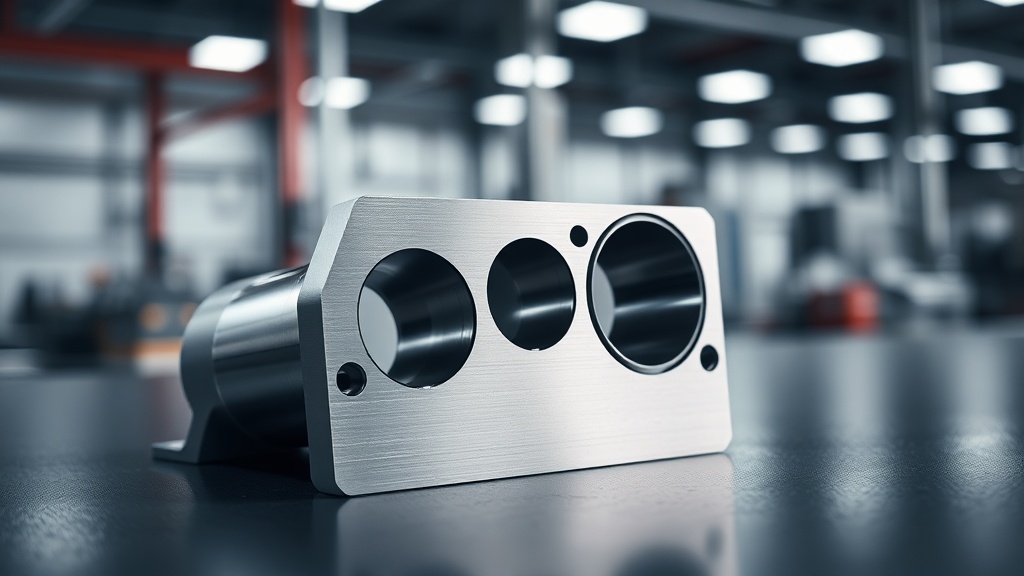
DMLS is the production-ready metal additive process. A high-power fiber laser scans a thin layer of metal powder and fuses it to the layer below — repeated thousands of times to build fully dense, fully functional metal parts that subtractive manufacturing cannot reproduce. Canadian DMLS capacity has matured rapidly over the past decade and now supports critical aerospace, medical, and energy applications.
Where DMLS Wins
Geometric complexity. Internal cooling channels, lattice structures, topology-optimized brackets, and conformal cooling for injection mold tooling — these are the classic DMLS use cases.
Aerospace structural and propulsion. Lightweight titanium brackets, fuel manifolds, heat exchangers, rocket components. Quebec’s Montreal aerospace cluster has substantial DMLS capacity.
Medical implants. Patient-specific titanium and cobalt-chrome implants printed from CT scan data. Canadian medical implant printing is concentrated near major teaching hospitals and orthopedic clusters.
Tool and die conformal cooling. Injection mold inserts with conformal cooling channels printed in tool steel — dramatically reducing cycle times in production molds.
Post-Processing Reality
DMLS-printed parts come off the machine still attached to a build plate, with rough surfaces, internal stresses, and supports. The post-processing chain is substantial:
- Stress relief while on the build plate.
- Build plate removal by EDM or saw.
- Support removal by hand, machining, or chemical etch.
- HIP for fatigue-critical applications.
- Final heat treatment — annealing, aging, solution treating.
- CNC machining of mating faces and tight tolerance features.
- Surface finishing — polishing, blasting, peening, anodizing.
Canadian DMLS shops typically partner with adjacent CNC, heat-treat, and finishing capacity to deliver finished, flight-qualified parts in a single program.
When to Use Different Processes
For polymer parts, SLS and MJF are the equivalent production processes. For high-volume metal parts of moderate complexity, casting or CNC machining usually beat DMLS on cost.
DMLS Metal 3D Printing at a Glance
- AS9100D (Aerospace)
- ISO 13485 (Medical Devices)
- ISO 9001:2015
- NADCAP (Welding/Heat Treat)
- CGP (Controlled Goods Program)
Available Materials
Industries We Serve
Frequently Asked Questions
When does DMLS make sense vs. CNC machining a metal part?
What post-processing does DMLS require?
Can DMLS parts be flight-qualified?
What materials are commonly DMLS-printed in Canada?
Get a DMLS Metal 3D Printing Quote
Get dmls metal 3d printing done right the first time. Join our waitlist and we'll connect you with vetted Canadian suppliers.
Or email us at hello@theassemblystudio.com
Explore More DMLS Metal 3D Printing Resources
3D Printing Services in Canada
Canadian 3D printing services for prototyping and production. FDM, SLS, MJF, SLA, and DMLS from vetted Canadian manufacturers with ISO certification.
FDM 3D Printing Services in Canada
Canadian FDM 3D printing services for functional prototypes, jigs and fixtures, and low-volume production. ABS, PETG, Nylon, PEEK, and ULTEM from vetted Canadian shops.
MJF (Multi Jet Fusion) 3D Printing Services in Canada
Canadian HP Multi Jet Fusion 3D printing for production-grade nylon parts. Fast turnaround, fine surface finish, and high-volume nylon production from Canadian shops.
SLA 3D Printing Services in Canada
Canadian SLA (stereolithography) 3D printing for high-detail prototypes, master patterns, and dental/medical applications. Full resin material range from Canadian shops.
How to Manufacture Car Parts in Canada
Complete guide to manufacturing automotive parts in Canada. Compare processes, materials, costs, and connect with vetted Canadian auto parts manufacturers.
Manufacturing intel.
Every Tuesday.
Real costs, vetted Canadian suppliers, and government funding alerts. One free email a week.
Unsubscribe anytime. Your data stays in Canada.