Orbital Welding Services in Canada
Orbital welding is automated TIG welding for tubing — a head clamps around the joint and rotates a tungsten electrode at a programmed speed and current to produce a perfectly consistent, full-penetration weld with no operator variability. It is the standard process for sanitary tubing, high-purity gas systems, hydraulic and pneumatic lines, and any application where weld consistency on every joint is non-negotiable.
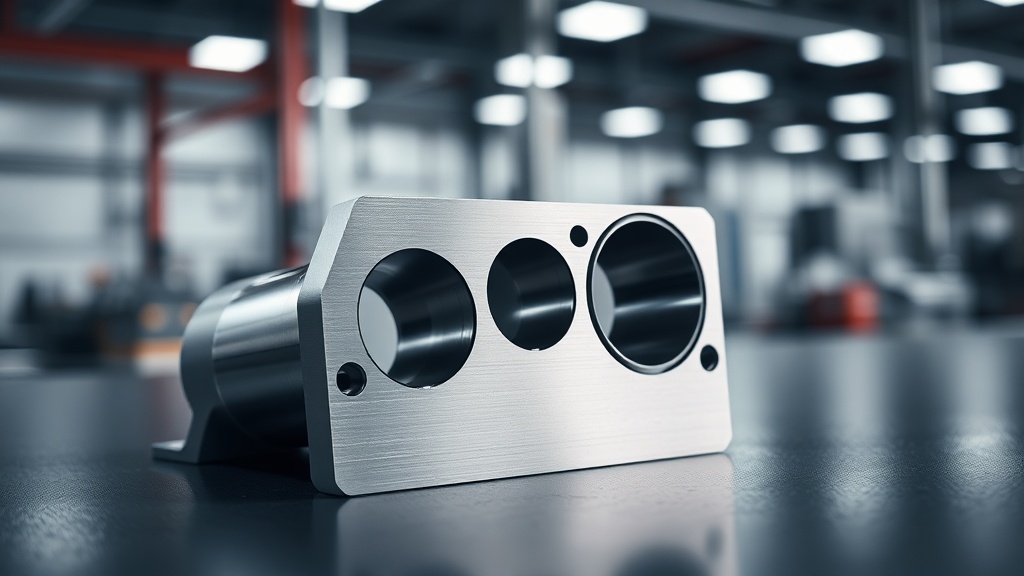
Orbital Welding in Canada
Orbital welding is the only practical way to deliver consistent, code-compliant welds across hundreds or thousands of tubing joints in a process plant or high-purity system. The orbital head clamps around a stationary tube, rotates the tungsten electrode through a programmed cycle, and produces a weld that is identical to every other weld on the system — inspectable, documentable, and traceable.
Where Orbital Is the Standard
Food and pharma processing. Stainless 316L sanitary tubing welded to ASME BPE / AWS D18.1 standards. Used in dairy, brewery, distillery, beverage, biotech, and pharmaceutical facilities.
Semiconductor and high-purity gas. Ultra-high-purity tubing (electropolished 316L, Hastelloy) for semiconductor fabs, pharma cleanrooms, and gas distribution systems.
Hydrogen, fuel cell, and clean energy. Canadian hydrogen-economy projects in BC, Alberta, and Quebec are growing demand for high-pressure hydrogen tubing welded to code-grade orbital procedures.
Aerospace and aviation. Hydraulic, fuel, and pneumatic lines on aircraft and spacecraft.
Canadian Orbital Capacity
Orbital capacity is concentrated near major process-industry clusters:
- Quebec — biotech, pharma, food and dairy.
- Ontario — pharma, food, semiconductor, aerospace.
- Alberta and BC — energy, hydrogen, and process industries.
Many shops carry both bench-cell production capacity and portable orbital systems for field installation work.
Beyond Orbital
For applications where orbital geometry doesn’t fit, manual TIG welding is the fallback. For sanitary tubing in less critical service, manual TIG to ASME BPE quality is achievable but slower and less consistent than orbital.
Orbital Welding at a Glance
- AWS D18.1 (Sanitary Tubing)
- ASME BPE (Bioprocessing Equipment)
- ASME Section IX (Pressure)
- CWB W47.1
- ISO 9001:2015
- SEMI F78 (Semiconductor)
Available Materials
Industries We Serve
Frequently Asked Questions
What's the difference between orbital and manual TIG?
Why is orbital welding standard for food, pharma, and biotech?
What tube sizes does orbital welding handle?
Do Canadian orbital shops support on-site field welding?
Get an Orbital Welding Quote
Get orbital welding done right the first time. Join our waitlist and we'll connect you with vetted Canadian suppliers.
Or email us at hello@theassemblystudio.com
Explore More Orbital Welding Resources
Welding & Fabrication Services in Canada
Canadian welding and fabrication services including MIG, TIG, robotic, and structural welding. CWB-certified shops for prototypes to production assemblies.
Laser Welding Services in Canada
Canadian laser welding services with low heat input and high speed. Fiber and Nd:YAG laser welding for medical, electronics, automotive, and aerospace assemblies.
MIG Welding Services in Canada
Canadian MIG welding (GMAW) services for steel and aluminum production fabrication. CWB W47.1 and W47.2-certified shops with high-deposition production capacity.
Robotic Welding Services in Canada
Canadian robotic welding for high-volume production. Six-axis robotic MIG and TIG cells with CWB-qualified procedures and consistent weld quality at scale.
Manufacturing intel.
Every Tuesday.
Real costs, vetted Canadian suppliers, and government funding alerts. One free email a week.
Unsubscribe anytime. Your data stays in Canada.