Robotic Welding Services in Canada
Robotic welding pairs CWB-qualified weld procedures with six-axis robots to produce high-volume weldments with operator-independent consistency. Canadian robotic welding cells run 24/7 production for automotive subassemblies, mining equipment, agricultural implements, and any product where weld variability is incompatible with production economics. We route to cells with the right reach, payload, fixture flexibility, and certification scope.
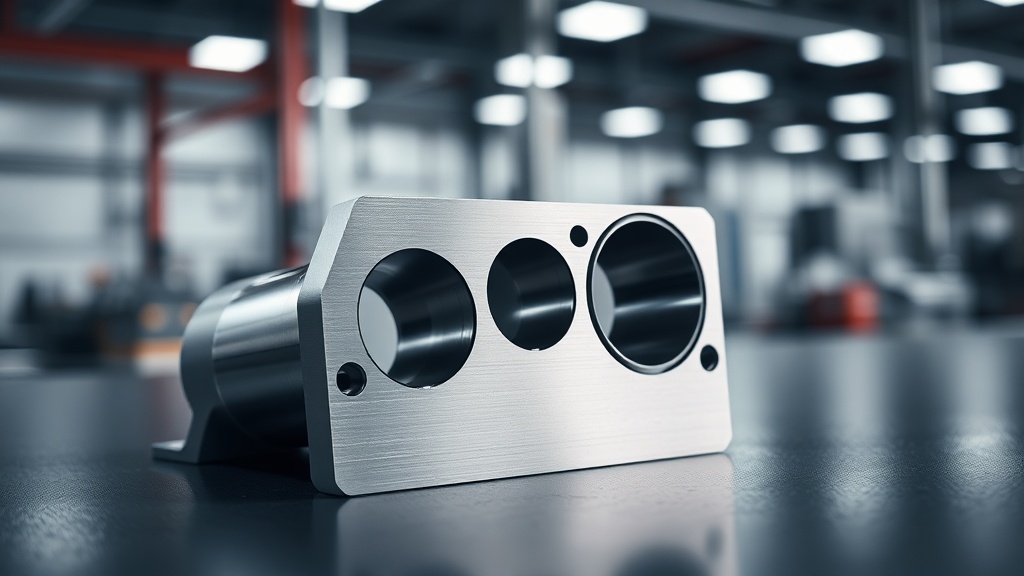
Robotic Welding in Canada
Robotic welding is how Canadian production fabrication scales. A six-axis robot with a calibrated MIG or TIG torch executes a programmed weld path identically thousands of times — eliminating operator-to-operator variability, holding cycle times to the second, and running unattended through second and third shifts.
Where Robotic Welding Wins
Automotive subassembly fabrication. Tier-1 and Tier-2 automotive shops in southern Ontario run dense robotic capacity for body-in-white substructures, exhaust assemblies, and chassis components.
Heavy equipment frames and weldments. Mining, agriculture, and construction equipment manufacturers in Western Canada use robotic cells for frame, bucket, and structural weldment production.
Industrial product fabrication. HVAC equipment, racking, lifting equipment, and industrial enclosures produce in robotic cells across Quebec, Ontario, and Alberta.
What Determines Robotic Suitability
Production volume. Above 500–1,000 annual units, fixturing economics typically favour robotic.
Joint accessibility. Robots need clear approach angles. Tight, internal, or shadowed joints may still require manual welding.
Part variability. Stamped, formed, or laser-cut parts with tight dimensional control are robot-friendly. Loose-tolerance fabrication needs vision-corrected cells or manual labour.
Canadian Robotic Network
We maintain relationships with both dedicated production-volume robotic shops and flex shops that run shorter runs on modular fixturing. The match depends on volume, lead time, and how much fixturing investment makes sense for your program.
Robotic Welding at a Glance
- CWB W47.1 / W47.2
- CSA W59
- AWS D1.1 / D1.2
- IATF 16949 (Automotive)
- ISO 9001:2015
Available Materials
Industries We Serve
Frequently Asked Questions
What's the minimum production volume to justify robotic welding?
Can robotic cells handle prototypes or one-offs?
Do robotic cells handle aluminum and stainless?
What does vision-corrected robotic welding mean?
Get a Robotic Welding Quote
Get robotic welding done right the first time. Join our waitlist and we'll connect you with vetted Canadian suppliers.
Or email us at hello@theassemblystudio.com
Explore More Robotic Welding Resources
Welding & Fabrication Services in Canada
Canadian welding and fabrication services including MIG, TIG, robotic, and structural welding. CWB-certified shops for prototypes to production assemblies.
Laser Welding Services in Canada
Canadian laser welding services with low heat input and high speed. Fiber and Nd:YAG laser welding for medical, electronics, automotive, and aerospace assemblies.
MIG Welding Services in Canada
Canadian MIG welding (GMAW) services for steel and aluminum production fabrication. CWB W47.1 and W47.2-certified shops with high-deposition production capacity.
Orbital Welding Services in Canada
Canadian orbital TIG welding for sanitary tubing, high-purity gas, semiconductor, food, pharma, and biotech systems. AWS D18.1 and ASME BPE-qualified shops.
Manufacturing intel.
Every Tuesday.
Real costs, vetted Canadian suppliers, and government funding alerts. One free email a week.
Unsubscribe anytime. Your data stays in Canada.