Resistance Spot Welding Services in Canada
Resistance spot welding fuses overlapping sheet metal at discrete points by passing high current between two copper electrodes that clamp the joint. It is the fastest, cheapest, and most automation-friendly way to assemble thin sheet metal — the dominant joining process in automotive body manufacturing, appliance fabrication, HVAC ductwork, and any product where two or more sheets need to be joined at production speed.
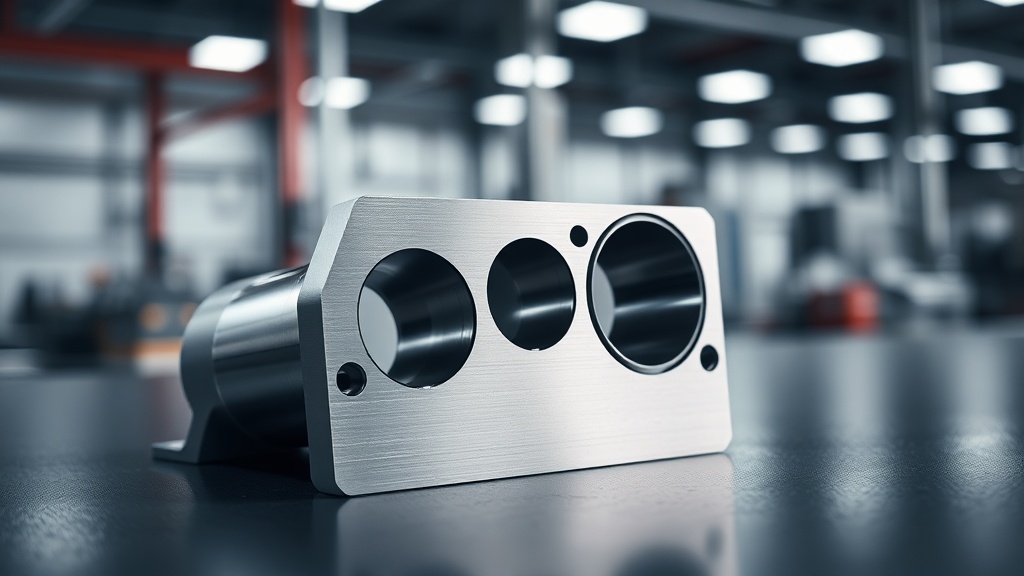
Resistance Spot Welding in Canada
Resistance spot welding is the most automation-friendly joining process in production manufacturing. Two copper electrodes clamp overlapping sheets, current flows for a fraction of a second, and a small fused nugget forms inside the joint. There is no filler, no shielding gas, no operator skill curve — just clamp, pulse, release.
Where Spot Welding Dominates
Automotive body in white. Every Canadian automotive assembly plant runs hundreds of robotic spot welders producing thousands of welds per vehicle. Every door, hood, deck lid, and chassis panel is held together by spot welds.
Appliances and white goods. Refrigerator cabinets, washer panels, range bodies, and dishwasher tubs assemble by spot welding for production speed and clean exterior cosmetics.
HVAC and ductwork. Sheet metal duct sections, plenums, and equipment cabinets join by spot welding to control labour cost and maintain clean surfaces.
Electronics and enclosures. Server racks, electrical cabinets, and computer chassis use spot welding for sheet-metal assembly.
What Determines Spot Weld Quality
Current, force, and time. The three controllable parameters that determine nugget size and joint strength.
Surface condition. Galvanizing, coatings, and contamination affect resistance and weld quality. Production-grade shops adapt parameters to specific incoming material.
Electrode wear. Copper electrodes deform with use; consistent quality requires regular dressing and replacement.
Canadian Spot Welding Capacity
Spot welding capacity is densest near automotive (southern Ontario), appliance (Quebec, Ontario), and HVAC (Ontario, BC) manufacturing clusters. Many shops run robotic cells for high-volume work alongside pedestal spot welders for short-run and prototype fabrication.
Resistance Spot Welding at a Glance
- AWS D8.1 (Automotive Spot Welding)
- AWS D8.7 (Spot Weld Quality)
- IATF 16949 (Automotive)
- CWB W47.1
- ISO 9001:2015
Available Materials
Industries We Serve
Frequently Asked Questions
How does spot welding compare to MIG for sheet metal assembly?
What thicknesses does spot welding handle?
Can spot welding handle aluminum and HSLA steel?
Is robotic spot welding worth it for my volume?
Get a Spot Welding Quote
Get resistance spot welding done right the first time. Join our waitlist and we'll connect you with vetted Canadian suppliers.
Or email us at hello@theassemblystudio.com
Explore More Resistance Spot Welding Resources
Welding & Fabrication Services in Canada
Canadian welding and fabrication services including MIG, TIG, robotic, and structural welding. CWB-certified shops for prototypes to production assemblies.
Laser Welding Services in Canada
Canadian laser welding services with low heat input and high speed. Fiber and Nd:YAG laser welding for medical, electronics, automotive, and aerospace assemblies.
MIG Welding Services in Canada
Canadian MIG welding (GMAW) services for steel and aluminum production fabrication. CWB W47.1 and W47.2-certified shops with high-deposition production capacity.
Orbital Welding Services in Canada
Canadian orbital TIG welding for sanitary tubing, high-purity gas, semiconductor, food, pharma, and biotech systems. AWS D18.1 and ASME BPE-qualified shops.
Manufacturing intel.
Every Tuesday.
Real costs, vetted Canadian suppliers, and government funding alerts. One free email a week.
Unsubscribe anytime. Your data stays in Canada.