Mill-Turn CNC Machining Services in Canada
Mill-turn machines combine the speed of CNC turning with the geometry freedom of milling. Live tooling, Y-axis travel, and sub-spindle pickup let a single machine produce complex parts — turned bodies with milled flats, cross-holes, splines, and off-axis features — without ever moving the part to a second machine. The result: shorter cycle times, tighter tolerance stack-up, and lower per-part cost.
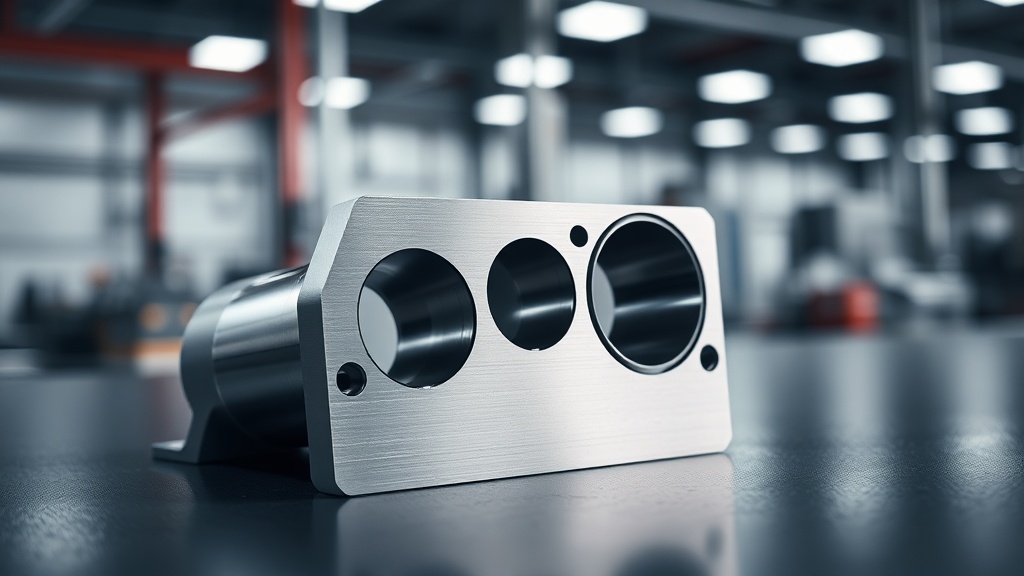
Mill-Turn CNC Machining in Canada
Mill-turn (also called multi-tasking or done-in-one machining) is the answer to a recurring problem: parts that have both rotational and prismatic features and need a tight datum relationship between them. Manifolds, hydraulic blocks with mounting flats, valve bodies, splined shafts, custom fittings — these are the parts mill-turn was built for.
How a Mill-Turn Machine Works
The machine starts as a lathe — bar stock or chuck, main spindle and sub-spindle. To this base, mill-turn adds:
- Live tooling with full milling spindle power (often 7–15 kW).
- Y-axis travel for off-centre milling features.
- B-axis (tilting tool) for compound-angle work without indexing.
- Sub-spindle pickup for back-working without operator intervention.
A complete part — turned body, milled flats, drilled cross-holes, threaded ports, splines, cosmetic finish — comes off the machine in one cycle.
Where Mill-Turn Wins in Canada
Aerospace fittings and structural couplings. Parts that combine concentric machined bores with bolt patterns, splines, or off-axis features benefit enormously from single-setup datum integrity.
Oil and gas valve and instrumentation parts. Bodies, stems, and fittings with critical concentric and off-axis features.
Medical instrument bodies and dental components. Where rotational accuracy and milled features need to share a single datum reference.
Cost Trade-Off
Mill-turn machine rates are higher than 3-axis or basic turning, but for the right part the total landed cost is lower. We quote both single-machine mill-turn and split turn-then-mill workflows and route to whichever produces the part faster and cheaper.
Mill-Turn CNC Machining at a Glance
- ISO 9001:2015
- AS9100 (Aerospace)
- API Q1 (Oil & Gas)
- IATF 16949 (Automotive)
- CGP (Controlled Goods Program)
Available Materials
Industries We Serve
Frequently Asked Questions
What's the difference between mill-turn and live-tooled turning?
When should I specify mill-turn over separate turning + milling operations?
Are mill-turn machines available across Canada?
What's the cost premium versus conventional turning?
Get a Mill-Turn Quote
Get mill-turn cnc machining done right the first time. Join our waitlist and we'll connect you with vetted Canadian suppliers.
Or email us at hello@theassemblystudio.com
Explore More Mill-Turn CNC Machining Resources
CNC Machining Services in Canada
Canadian CNC machining services for prototyping and production. 3-axis, 5-axis, turning, and milling from vetted Canadian manufacturers with CSA and ISO certification.
3-Axis CNC Milling Services in Canada
Canadian 3-axis CNC milling for brackets, plates, housings, and prismatic parts. ISO 9001 and CSA-certified shops with prototype-to-production capacity.
5-Axis CNC Milling Services in Canada
Canadian 5-axis CNC machining for aerospace, medical, and complex geometry parts. AS9100 and ISO 13485-certified shops with simultaneous and 3+2 capability.
CNC Grinding Services in Canada
Canadian CNC grinding for hardened steel, ceramics, and ultra-tight tolerance work. Surface, cylindrical, centerless, and ID/OD grinding from precision Canadian shops.
How to Manufacture Car Parts in Canada
Complete guide to manufacturing automotive parts in Canada. Compare processes, materials, costs, and connect with vetted Canadian auto parts manufacturers.
Manufacturing intel.
Every Tuesday.
Real costs, vetted Canadian suppliers, and government funding alerts. One free email a week.
Unsubscribe anytime. Your data stays in Canada.