CNC Grinding Services in Canada
CNC grinding is the precision finishing process for hardened materials and ultra-tight tolerance work. Where milling and turning leave off, grinding takes over — achieving surface finishes below 8 Ra and tolerances tighter than 0.0001 in. Canadian grinding shops serve tooling, hydraulics, aerospace, and bearing industries with surface, cylindrical, centerless, and internal grinding capability.
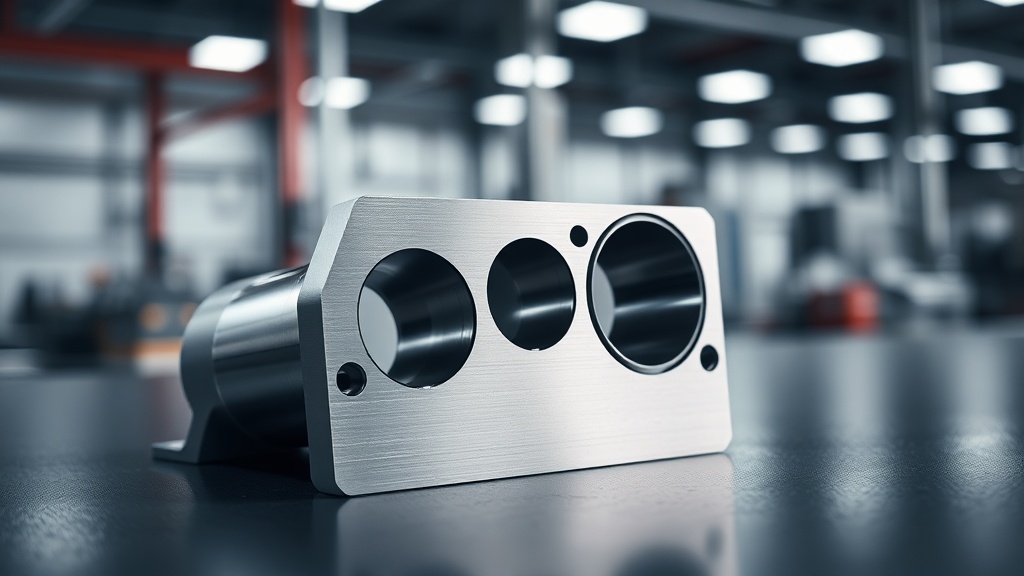
CNC Grinding in Canada
CNC grinding lives at the precision end of subtractive manufacturing. It’s the process you reach for when material hardness, tolerance, or surface finish exceeds what milling and turning can deliver. Canadian grinding capacity supports the tool-and-die industry that powers automotive stamping, the bearing industry, aerospace structural finishing, and high-precision hydraulic components.
Grinding Process Types
Surface grinding — flats, parallel-feature components, mold and die plates, ground gauge blocks.
Cylindrical grinding — OD finishing on shafts, pins, rolls, and round components.
Internal grinding — bores requiring tight diameter and surface finish, common in bearing races and hydraulic cylinders.
Centerless grinding — high-volume cylindrical parts processed without fixturing, ideal for pins, dowels, and rollers in production quantities.
Where Grinding Is Indispensable
Post-heat-treatment finishing. Hardened tool steel parts — die components, mold inserts, punches — are rough-machined soft, heat treated, then ground to final dimension. Grinding is the only economical way to remove heat-treat distortion at this hardness.
Carbide and ceramic finishing. Cutting tool blanks, ceramic seal faces, and other ultra-hard materials are ground to spec because no other process can touch them at production speed.
Surface finish below 8 Ra. Bearing surfaces, hydraulic cylinder bores, and optical-grade flats live in the surface-finish range that only grinding (and, beyond that, lapping or honing) reaches.
Canadian Precision Grinding Network
Tool-and-die centric grinding capacity concentrates in southern Ontario (Windsor through Toronto), reflecting the automotive stamping industry. Aerospace-grade grinding is densest near Montreal and Toronto. Specialty grinding (gear, thread, jig) is available at niche shops we maintain in our network for project-specific routing.
CNC Grinding at a Glance
- ISO 9001:2015
- AS9100 (Aerospace)
- ISO 13485 (Medical)
- API Q1 (Oil & Gas)
Available Materials
Industries We Serve
Frequently Asked Questions
What types of CNC grinding are available in Canada?
When do I need grinding instead of finish milling?
Can hardened steel parts be ground after heat treatment?
What's the cost difference between grinding and finish milling?
Get a CNC Grinding Quote
Get cnc grinding done right the first time. Join our waitlist and we'll connect you with vetted Canadian suppliers.
Or email us at hello@theassemblystudio.com
Explore More CNC Grinding Resources
CNC Machining Services in Canada
Canadian CNC machining services for prototyping and production. 3-axis, 5-axis, turning, and milling from vetted Canadian manufacturers with CSA and ISO certification.
3-Axis CNC Milling Services in Canada
Canadian 3-axis CNC milling for brackets, plates, housings, and prismatic parts. ISO 9001 and CSA-certified shops with prototype-to-production capacity.
5-Axis CNC Milling Services in Canada
Canadian 5-axis CNC machining for aerospace, medical, and complex geometry parts. AS9100 and ISO 13485-certified shops with simultaneous and 3+2 capability.
Mill-Turn CNC Machining Services in Canada
Canadian mill-turn CNC machining for complex prismatic-and-rotational parts in a single setup. Live tooling, sub-spindle, and Y-axis lathes from certified shops.
How to Manufacture Car Parts in Canada
Complete guide to manufacturing automotive parts in Canada. Compare processes, materials, costs, and connect with vetted Canadian auto parts manufacturers.
Manufacturing intel.
Every Tuesday.
Real costs, vetted Canadian suppliers, and government funding alerts. One free email a week.
Unsubscribe anytime. Your data stays in Canada.