Oil & Gas Manufacturing in Canada
Canada's oil and gas sector is one of the largest in the world, with proven reserves of approximately 170 billion barrels of oil — the third-largest reserve globally — and a natural gas industry that feeds both domestic demand and growing LNG export infrastructure. The upstream, midstream, and downstream segments collectively drive billions of dollars annually in custom-manufactured equipment, from wellhead assemblies on the Alberta oil sands to pressure vessels at New Brunswick refineries. Canadian manufacturers have built deep expertise in the demanding metallurgical and engineering requirements that extreme pressures, temperatures, and corrosive environments demand.
Overview
Canada’s oil and gas sector is one of the largest in the world, with proven reserves of approximately 170 billion barrels of oil — the third-largest reserve globally — and a natural gas industry that feeds both domestic demand and growing LNG export infrastructure. The upstream, midstream, and downstream segments collectively drive billions of dollars annually in custom-manufactured equipment, from wellhead assemblies on the Alberta oil sands to pressure vessels at New Brunswick refineries. Canadian manufacturers have built deep expertise in the demanding metallurgical and engineering requirements that extreme pressures, temperatures, and corrosive environments demand.
The fabrication supply chain supporting this sector is mature and highly specialized. Alberta alone hosts hundreds of shops certified to fabricate pressure-containing equipment, with many holding multiple API licenses alongside provincial CRN registration. This concentration of capability means buyers can source complex, multi-component assemblies — manifolds, skid packages, separator vessels — within a single provincial ecosystem, reducing logistics complexity and enabling tighter coordination between engineering and fabrication teams.
The Assembly connects buyers in the oil and gas industry with Canadian manufacturers who hold the certifications and process capabilities required for critical service applications. Whether you need a single custom valve or a full production skid, the network includes shops that have supplied major operators including Suncor, Imperial Oil, Enbridge, and TC Energy.
Certification Requirements
API (American Petroleum Institute)
API licenses are the international standard for oil and gas equipment quality. The most relevant specifications for manufactured goods include API 6A (wellhead and Christmas tree equipment), API 6D (pipeline valves), API 620/650 (storage tanks), and API Q1 (quality management for manufacturing). Holding an API license requires a documented Quality Management System, a facility audit by an API-authorized third party, and ongoing surveillance audits. Canadian manufacturers seeking API certification work through accredited certification bodies and typically complete the process in six to twelve months depending on scope. For buyers, an API license is a baseline requirement for any pressure-containing or safety-critical component destined for regulated oilfield service.
CRN (Canadian Registration Number)
A CRN is a mandatory registration issued by each provincial/territorial pressure equipment authority (e.g., ABSA in Alberta, TSSA in Ontario) for any pressure vessel or fitting sold into that jurisdiction. Manufacturers and distributors must register each design individually, and the number must appear on the nameplate. CRN registration involves submitting engineering drawings and calculations to the relevant authority for review. Lead times vary by province — Alberta typically processes submissions in four to eight weeks. Foreign manufacturers must appoint a Canadian representative. The Assembly’s network includes shops experienced in managing multi-province CRN registration for clients with national distribution requirements.
ASME (American Society of Mechanical Engineers)
ASME Boiler and Pressure Vessel Code (BPVC) certification — commonly referred to as the “ASME stamp” — is a prerequisite for most pressure vessel fabrication in Canada. The U, U2, S, and PP stamps are most frequently required. Achieving and maintaining an ASME stamp requires a documented Quality Control manual, documented procedures for welding (including WPS/PQR), inspection, and materials traceability, and periodic joint reviews by an ASME-authorized inspection agency (AIA). The ASME stamp is recognized across Canada and in most international jurisdictions, making it a core credential for export-oriented shops.
NACE (now AMPP)
NACE International — now merged with SSPC under the AMPP umbrella — sets the standards for corrosion control and materials selection in oil and gas environments. Standards such as NACE MR0175/ISO 15156 (sour service) and NACE SP0169 (pipeline coating) are contractually specified on most upstream and midstream purchase orders. Manufacturers working in sour service applications must demonstrate material qualification, controlled welding procedures, and hardness testing. Coating applicators should hold NACE coating inspector certifications. For buyers sourcing equipment for H2S environments, NACE compliance is non-negotiable.
Canadian Manufacturing Clusters
Edmonton and Calgary, Alberta are the undisputed centre of gravity for oil and gas fabrication in Canada. The Industrial Heartland northeast of Edmonton hosts major petrochemical and upgrading facilities and a dense cluster of pressure vessel shops, pipe fabricators, and skid builders. Calgary serves as the engineering and procurement hub, with many EPC firms and owner operators headquartered there. Shops in the corridor have ready access to Alberta-certified inspectors, ABSA-registered designs, and a deep pool of Red Seal welders.
Fort McMurray, Alberta supports the oil sands operators with local fabrication and maintenance capabilities. Proximity to major mine sites reduces freight costs for large, heavy equipment and enables faster turnaround on emergency repairs and replacement parts.
Saint John, New Brunswick is home to the Irving Oil refinery — the largest in Canada — and a cluster of industrial fabricators that have built their capabilities around serving that facility and the broader Atlantic offshore sector. Shops here are experienced in marine-grade and offshore specifications, including DNV and Lloyd’s Register requirements alongside standard API/ASME credentials.
Sarnia, Ontario hosts one of Canada’s most significant petrochemical and refining complexes, known as “Chemical Valley.” Fabricators in Sarnia and the surrounding southwestern Ontario region supply pressure equipment, heat exchangers, and piping assemblies to both the local complex and customers across North America.
Key Manufacturing Capabilities
Oil and gas applications demand tight process control and full material traceability. The most relevant capabilities in The Assembly’s network include:
- Pressure vessel fabrication — ASME-stamped vessels from carbon steel, stainless, and exotic alloys (Inconel, Duplex SS)
- CNC machining — close-tolerance valve bodies, flanges, and wellhead components
- Orbital and submerged arc welding — consistent, procedure-qualified welds for code applications
- Pipe spool fabrication — fit-up, welding, and hydrotesting to ASME B31.3 and B31.4
- Heat treatment — PWHT, stress relief, normalizing for sour service compliance
- NDT inspection — RT, UT, MT, PT performed by Level II/III certified technicians
- Surface coating and lining — internal epoxy lining, thermal spray, and external pipeline coatings
Provincial Incentives & Funding
SR&ED (Scientific Research and Experimental Development): Federal tax credit covering 15–35% of eligible R&D expenditures. Manufacturers developing new welding procedures, materials qualifications, or process automation for oil and gas applications frequently qualify. Alberta-based manufacturers can stack provincial R&D credits on top of the federal base.
IRAP (Industrial Research Assistance Program): NRC IRAP provides advisory services and non-repayable funding (typically $50,000–$500,000+ per project) to SMEs developing or adopting new technologies. Equipment manufacturers pursuing automation, digital inspection, or advanced materials for oil and gas service are strong candidates.
CanExport: Global Affairs Canada’s CanExport program reimburses up to 75% of eligible export development costs (trade shows, business development travel, market research), to a maximum of $75,000 per project. Relevant for Alberta and New Brunswick shops targeting US Gulf Coast or international LNG project supply chains.
Alberta Petrochemicals Incentive Program (APIP): Provides royalty credits to encourage construction of new petrochemical facilities, which in turn drives demand for fabricated equipment from Alberta shops.
CUSMA & Trade Context
The Canada-United States-Mexico Agreement (CUSMA/USMCA) is highly favourable for oil and gas equipment trade across the Canada-US border. Most steel and aluminum fabricated products qualify for duty-free treatment provided they meet rules of origin requirements — generally requiring that the primary materials and the manufacturing transformation occur within the CUSMA region. Canadian manufacturers supplying US Gulf Coast refineries, Permian Basin operators, or LNG export terminals benefit from this framework. Tariff engineering and Certificate of Origin documentation are straightforward for shops with established US customer relationships. The Assembly can connect buyers with manufacturers experienced in completing CUSMA origin certifications.
Lead Times & Cost Considerations
Lead times for oil and gas fabrication vary significantly by complexity. Standard carbon steel pressure vessels (ASME-stamped, single-compartment) typically run eight to sixteen weeks from purchase order to delivery. Complex multi-vessel skid packages with integrated piping, instrumentation, and structural steel can run twenty to thirty-six weeks depending on material procurement. CNC-machined valve or wellhead components are often four to ten weeks.
Cost ranges in CAD reflect both material content and certification overhead. A simple ASME-stamped separator vessel might run $40,000–$150,000 CAD depending on size and alloy. A complete well-test package or gas processing skid can range from $500,000 to several million CAD. API-certified valve bodies and machined components are priced individually based on material and tolerance requirements.
FAQ
Does The Assembly work with shops that hold multiple API licenses? Yes. Several manufacturers in the network hold concurrent API 6A, 6D, and Q1 licenses, making them suitable for fully integrated valve and wellhead supply.
Can Canadian manufacturers register designs in multiple provinces? Yes. Multi-province CRN registration is routine for shops serving national customers. The process involves separate submissions to each provincial authority, and many shops manage this on behalf of their clients.
What alloys are commonly available in the Alberta fabrication ecosystem? Carbon steel (A516-70, A106), 316/304 stainless, Duplex 2205, and Inconel 625/825 are all routinely sourced through Alberta service centres. Lead times for exotic alloys vary by mill availability.
Are Canadian shops competitive on price compared to US Gulf Coast fabricators? Exchange rate dynamics frequently make Canadian shops cost-competitive on USD-denominated projects. Alberta and Ontario fabricators regularly win Gulf Coast and offshore work on both price and quality credentials.
How does The Assembly verify that listed manufacturers hold current certifications? The Assembly conducts ongoing verification of certification status directly with API, ABSA, ASME, and other issuing bodies. Buyers can request current certificates prior to issuing an RFQ.
Certifications that matter in Oil & Gas
API
RequiredAmerican Petroleum Institute product and quality specifications (API Q1, 6A, 6D, 16A, etc.) governing wellhead, valve, and pipeline equipment used in oil and gas. Essential for upstream and midstream equipment manufacturers.
CRN
RequiredCanadian Registration Number — provincial registration confirming pressure-containing equipment design has been reviewed and approved by the receiving province's safety authority. Required before installation in Canada.
ASME
RequiredAmerican Society of Mechanical Engineers Boiler and Pressure Vessel Code. ASME stamps (U, S, R, etc.) are required for pressure vessels and boilers in most North American jurisdictions.
NACE
RequiredNACE International (now AMPP) corrosion-control standards. Required for materials and processes serving sour and corrosive service environments in oil and gas applications.
Where Oil & Gas clusters in Canada
Edmonton/Calgary AB
Heart of Canada's oil and gas fabrication ecosystem. Hundreds of shops certified for pressure-containing equipment with concurrent API and CRN registration. Manufactures wellhead assemblies, valves, separators, and skid packages.
Fort McMurray AB
Oil sands operations supply chain — fabrication and modular construction for upgraders, mines, and in-situ facilities. Heavy focus on large-scale modular fabrication.
Saint John NB
Refining and downstream oil and gas equipment cluster anchored by Irving Oil. Pressure vessel and pipeline component fabrication for Atlantic Canada.
Sarnia ON
Petrochemical and refining manufacturing corridor with deep expertise in process equipment, piping, and pressure vessels.
Canadian incentives
- SR&ED
Federal R&D tax credit. Up to 35% refundable on the first $3M of qualifying expenditure for CCPCs; 15% non-refundable for larger corporations. Applies to wages, materials, and contracts for systematic experimental development.
- IRAP
NRC Industrial Research Assistance Program. Non-repayable contributions for SMEs conducting industrial R&D. Typical project funding ranges from $50K to $500K with NRC technical advisor support.
- CanExport
Federal export development grant program. Individual grants from $20K to $100K cover trade shows, market research, and business development travel for Canadian exporters.
Frequently Asked Questions
Does The Assembly work with shops that hold multiple API licenses?
Can Canadian manufacturers register designs in multiple provinces?
What alloys are commonly available in the Alberta fabrication ecosystem?
Are Canadian shops competitive on price compared to US Gulf Coast fabricators?
How does The Assembly verify that listed manufacturers hold current certifications?
Get matched with a Canadian shop serving this industry
Get matched with Canadian shops that understand oil & gas compliance, certifications, and lead times.
Or email us at hello@theassemblystudio.com
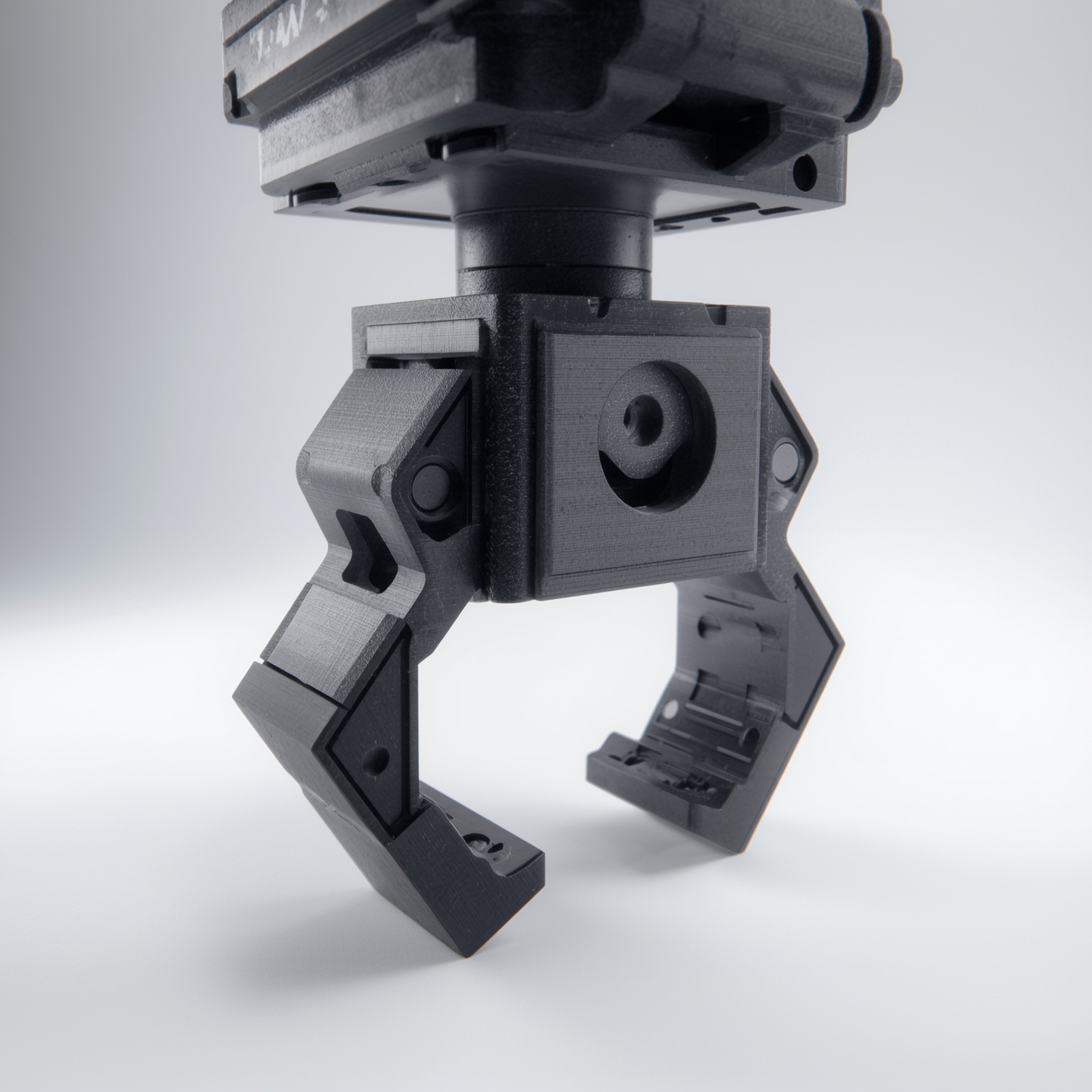
Capabilities and materials used in Oil & Gas
CNC Machining Services in Canada
Canadian CNC machining services for prototyping and production. 3-axis, 5-axis, turning, and milling from vetted Canadian manufacturers with CSA and ISO certification.
Finishing & Coating Services in Canada
Canadian finishing and coating services including anodizing, powder coating, plating, and cerakote. ISO-certified surface treatments from vetted providers.
Quality Inspection Services in Canada
Canadian CMM inspection, metrology, and quality assurance services. First article inspection, GD&T validation, and 3D scanning from vetted providers with full reporting.
Manufacturing intel.
Every Tuesday.
Real costs, vetted Canadian suppliers, and government funding alerts. One free email a week.
Unsubscribe anytime. Your data stays in Canada.