Aerospace & Defence Manufacturing in Canada
Canada's aerospace and defence sector is one of the largest in the world, ranking fifth globally by revenue with annual sales exceeding $34 billion CAD. The industry employs more than 89,000 people across roughly 700 companies, ranging from Tier 1 primes to specialized job shops producing flight-critical components. Canada's aerospace manufacturing base is genuinely export-oriented — approximately 80% of production is sold outside the country, primarily to the United States, with strong ties to European OEMs and defence programmes as well.
Overview
Canada’s aerospace and defence sector is one of the largest in the world, ranking fifth globally by revenue with annual sales exceeding $34 billion CAD. The industry employs more than 89,000 people across roughly 700 companies, ranging from Tier 1 primes to specialized job shops producing flight-critical components. Canada’s aerospace manufacturing base is genuinely export-oriented — approximately 80% of production is sold outside the country, primarily to the United States, with strong ties to European OEMs and defence programmes as well.
The sector is anchored by a small number of major primes — Bombardier, Pratt & Whitney Canada, Bell Textron, and CAE — but the majority of the supply chain is made up of Tier 2 and Tier 3 manufacturers producing structural components, engine parts, landing gear assemblies, avionics housings, and interiors. These mid-market suppliers are where most sourcing decisions are made, and where buyers who need certified, flight-ready parts actually go looking for capacity.
Canada matters for aerospace buyers for several reasons beyond geography. The country has a deep engineering talent base, particularly in Quebec and Ontario, strong university-to-industry pipelines, and decades of accumulated process knowledge in tight-tolerance machining, composite layup, and special process work. Regulatory alignment with FAA frameworks through bilateral agreements also simplifies certification acceptance for parts destined for U.S. programmes. The Assembly connects procurement teams directly with Canadian manufacturers that hold the right approvals and have demonstrated capacity.
Certification Requirements
AS9100
AS9100 is the quality management system standard for aviation, space, and defence. It builds on ISO 9001 and adds requirements specific to product safety, configuration management, risk management, and first-article inspection. Any manufacturer supplying flight hardware or ground support equipment to an aerospace OEM will need AS9100 certification.
Certification is issued through accredited third-party registrars (Bureau Veritas, SGS, TUV, and others operate across Canada). The process involves a documentation review, a Stage 1 readiness audit, and a Stage 2 certification audit. For a mid-size shop new to the standard, expect 12–18 months of preparation and audit costs in the range of $15,000–$40,000 CAD depending on facility size and scope. Annual surveillance audits and triennial recertification are required to maintain the certificate.
ITAR
The International Traffic in Arms Regulations (ITAR) is a U.S. regulatory regime controlling the export and handling of defence-related articles and technical data. Canadian manufacturers supplying U.S. defence programmes — or handling technical data from U.S. defence contractors — must understand their ITAR obligations. Canada benefits from a partial exemption under the Canadian Exemptions to ITAR (22 CFR 126.5), but this does not eliminate all requirements. Companies handling ITAR-controlled data must implement access controls, employee training, and record-keeping procedures. Legal counsel familiar with both U.S. export controls and Canadian obligations is essential before pursuing ITAR-controlled work.
NADCAP
NADCAP (National Aerospace and Defence Contractors Accreditation Program) is a special process accreditation programme managed by the Performance Review Institute. It covers processes where process control directly affects part quality in ways that cannot be fully verified by inspection alone — heat treatment, non-destructive testing, chemical processing, welding, and coatings. Most Tier 1 aerospace OEMs mandate NADCAP accreditation for suppliers performing these processes on flight hardware.
NADCAP audits are conducted by PRI-trained industry experts against commodity-specific checklists. Canadian shops seeking NADCAP accreditation can access the programme through PRI directly. Achieving initial accreditation typically takes 6–12 months and requires demonstrated process control records, calibrated equipment, and trained personnel.
CASR (Canadian Aviation Safety Regulations)
The Canadian Aviation Safety Regulations govern the manufacture, maintenance, and modification of civil aircraft in Canada. Manufacturers producing approved parts for Canadian-registered aircraft must hold a Manufacturing Approval (MA) issued by Transport Canada. The MA process involves demonstrating that quality systems, design data control, and production processes meet Transport Canada standards. Companies manufacturing under an FAA Production Approval and seeking Canadian equivalence should work with Transport Canada’s Aircraft Certification branch directly.
Controlled Goods Program
Canada’s Controlled Goods Program (CGP), administered by Public Services and Procurement Canada, regulates access to certain defence-related goods and technical data within Canada. Any Canadian company that examines, possesses, or transfers controlled goods must be registered under the CGP. Registration involves a security assessment of the company’s designated officials and key personnel, facility security measures, and an internal compliance programme. Registration is renewable every five years. Companies pursuing Canadian DND contracts or handling NATO-origin technical data will encounter CGP requirements early in the procurement process.
Canadian Manufacturing Clusters
Montreal, QC is the undisputed centre of Canadian aerospace manufacturing. The Montreal cluster — anchored by Bombardier’s commercial aircraft and business jet programmes, Pratt & Whitney Canada’s turbofan engine production in Longueuil, and Heroux-Devtek’s landing gear operations — supports a dense supply chain of precision machining shops, composite fabricators, and special process houses. The Aerospace Hub at Mirabel and the proximity to Polytechnique Montreal and ETS create a strong talent pipeline. Quebec’s tax credit programmes for R&D and the Investissement Quebec portfolio make the province financially attractive for aerospace investment.
Toronto/GTA, ON hosts a significant concentration of aerospace suppliers, particularly in the Mississauga, Brampton, and Markham corridors. The cluster tends toward avionics, interiors, simulation (CAE’s global headquarters is in Montreal but has substantial Toronto operations), and structural subassemblies. Proximity to Pearson International and strong logistics infrastructure supports time-sensitive aerospace supply chains.
Winnipeg, MB has built a specialized position in advanced composite manufacturing, most visibly through the Boeing composite work at StandardAero and the broader supplier base supporting commercial aircraft programmes. Winnipeg manufacturers have invested significantly in automated fibre placement, autoclave processing, and NDT capability. The Manitoba government has supported aerospace cluster development through targeted infrastructure and workforce programmes.
Halifax, NS anchors Canada’s naval shipbuilding cluster, with Irving Shipbuilding holding the National Shipbuilding Strategy combat vessel contract. The Halifax cluster supports precision marine fabrication, structural steel, and increasingly sophisticated systems integration work. Suppliers across Atlantic Canada are developing capability to serve NSS programme requirements.
Key Manufacturing Capabilities
Aerospace and defence work demands tight-tolerance CNC machining — typically in aluminum alloys, titanium, Inconel, and other high-performance materials — with full first-article inspection and material traceability from mill cert to finished part. Sheet metal fabrication for airframe structures requires skilled operators, precision tooling, and AS9100-governed inspection processes.
Composite manufacturing capability — wet layup, prepreg, autoclave cure, and increasingly out-of-autoclave processes — is concentrated in Quebec and Manitoba. Non-destructive testing (UT, RT, PT, MT, ET) is a mandatory downstream process for most flight hardware and requires both NADCAP accreditation and certified Level II/III technicians. Surface treatment — anodizing, chemical film, thermal spray, and aerospace-grade painting — is typically performed by specialty job shops operating under approved process specifications.
The Assembly’s supplier network includes manufacturers qualified across all of these processes, with current AS9100 certificates and, in many cases, existing OEM approval status.
Provincial Incentives & Funding
SR&ED (Scientific Research and Experimental Development) is the primary federal R&D tax incentive and is heavily used across the aerospace sector. Eligible expenditures — wages, materials, and third-party contracts for qualifying R&D — can generate a 15% federal tax credit for large corporations and up to 35% for Canadian-controlled private corporations (CCPCs) on the first $3 million of qualified expenditure. Aerospace companies regularly claim SR&ED on new process development, first-article qualification work, and tooling R&D. Annual claims in the $500,000–$2,000,000 CAD range are not unusual for mid-size aerospace suppliers.
IRAP (Industrial Research Assistance Program) provides non-repayable contributions for SMEs conducting industrial R&D. For aerospace manufacturers, IRAP funding often supports new process qualification, digital manufacturing implementation, and capability expansion. Typical project funding ranges from $50,000 to $500,000 CAD, with NRC Industrial Technology Advisors providing both funding access and technical advisory support.
CanExport supports Canadian companies pursuing export market development, including establishing relationships with foreign aerospace OEMs. Individual project grants typically range from $20,000 to $100,000 CAD and cover eligible activities like international trade shows, market research, and business development travel.
Quebec-specific: The ESSOR programme (Investissement Quebec) provides repayable loans and loan guarantees for major aerospace investment projects. The Quebec R&D tax credit (CRDT) stacks with federal SR&ED for Quebec-based companies. The Aerospace Technology Demonstration Program (TDGA) funds collaborative projects between primes and suppliers.
CUSMA & Trade Context
The Canada-United States-Mexico Agreement (CUSMA, known as USMCA in the U.S.) preserves duty-free access for most aerospace components traded between Canada and the United States, which is essential given that the majority of Canadian aerospace production is exported south. Rules of origin under CUSMA for aerospace products generally require substantial transformation within North America, with specific regional value content thresholds varying by tariff classification.
Canadian manufacturers supplying U.S. defence programmes benefit from the Defence Production Sharing Agreement (DPSA) and the Defence Development Sharing Agreement (DDSA), which predate CUSMA and provide additional preferential access for defence procurement. These agreements allow Canadian companies to bid on U.S. defence contracts without Buy American restrictions in many cases, a significant commercial advantage.
Tariff considerations for raw materials — particularly aerospace-grade aluminum, titanium, and specialty alloys — require attention. The temporary steel and aluminum tariffs imposed in 2018 and subsequent exemptions created complexity that persists in supply chain contracts. Buyers and suppliers should confirm current tariff status on specific materials before finalizing cost assumptions.
Lead Times & Cost Considerations
Aerospace machined components typically carry lead times of 8–20 weeks from drawing release to first article, depending on material procurement, machine shop capacity, and inspection queue. Complex assemblies with special processes (heat treat, NDT, surface treatment) add 2–6 weeks. Tooling lead times for dedicated fixtures can add another 4–12 weeks to initial production runs.
Cost drivers in aerospace manufacturing include material costs (aerospace-grade aluminum billet runs $8–$18 CAD/kg; titanium $40–$120 CAD/kg depending on alloy), tight-tolerance machining with low buy-to-fly ratios, mandatory inspection and documentation costs, and the overhead associated with maintaining AS9100 and special process approvals. First-article costs on complex parts frequently run 3–5x recurring unit price.
Buyers sourcing through The Assembly can expect competitive Canadian pricing with full regulatory compliance — without the overhead of qualifying an unknown offshore supplier or managing cross-Pacific logistics for flight-critical hardware.
FAQ
What certifications should I require from a Canadian aerospace supplier? At minimum, AS9100 Rev D certification for quality management. For special processes (heat treat, NDT, chemical processing, welding), require NADCAP accreditation for the specific commodity. For parts on Canadian-registered aircraft, verify the supplier holds or operates under a Transport Canada Manufacturing Approval. For defence work, confirm Controlled Goods Program registration.
How does Canada’s Controlled Goods Program affect procurement? Any Canadian company that handles, examines, or transfers defence-related controlled goods — including technical drawings and specifications — must be registered under the CGP. Buyers sharing ITAR or controlled technical data with Canadian suppliers should verify CGP registration before transmitting any controlled information.
Can Canadian manufacturers supply U.S. defence programmes directly? Yes. The Defence Production Sharing Agreement allows registered Canadian companies to bid on U.S. defence contracts on a largely equal footing with U.S. domestic suppliers in many categories. Canadian manufacturers must still comply with ITAR requirements for controlled technical data and hardware.
What is NADCAP and why does it matter? NADCAP is an industry-managed special process accreditation that aerospace OEMs require for suppliers performing processes where in-process control is critical to final part quality. If your part requires heat treatment, chemical processing, NDT, or certain welding operations, your supplier must hold current NADCAP accreditation for those commodities. Accreditation status can be verified through the PRI Auditor Management System (eAuditNet).
How does The Assembly help aerospace buyers find qualified Canadian suppliers? The Assembly maintains a verified network of Canadian manufacturers with current AS9100 certificates, NADCAP accreditations, and in many cases existing OEM approval status. Buyers submit requirements through the platform and are matched with suppliers that have the right qualifications and available capacity — cutting weeks off the supplier qualification process.
Certifications that matter in Aerospace & Defence
AS9100
RequiredAerospace quality management standard built on ISO 9001, with added requirements for product safety, configuration management, risk management, and first-article inspection. Required for any flight-hardware supplier.
ITAR
RequiredUS International Traffic in Arms Regulations. Canadian manufacturers handling US defence-related articles or technical data must implement access controls, training, and record-keeping under the Canadian exemption regime.
NADCAP
RequiredIndustry-managed special process accreditation for heat treatment, NDT, chemical processing, welding, and coatings. Mandated by most Tier 1 aerospace OEMs for flight-hardware special processes.
CASR
RequiredCanadian Aviation Safety Regulations governing manufacture, maintenance, and modification of civil aircraft. Manufacturing Approval issued by Transport Canada is required for approved parts on Canadian-registered aircraft.
Controlled Goods Program
RequiredCanadian regulatory regime administered by PSPC controlling access to defence-related goods and technical data. Registration is required for any Canadian company examining, possessing, or transferring controlled goods.
Where Aerospace & Defence clusters in Canada
Montreal, QC
Canada's largest aerospace cluster, anchored by Bombardier, Pratt & Whitney Canada, and Heroux-Devtek. Dense supply chain of precision machining shops, composite fabricators, and special process houses, with strong talent pipeline from Polytechnique Montreal and ETS.
Toronto/GTA, ON
Concentrated supplier base in the Mississauga, Brampton, and Markham corridors. Specializes in avionics, interiors, simulation, and structural subassemblies. Strong logistics infrastructure supports time-sensitive supply chains.
Winnipeg, MB
Specialized advanced composite manufacturing cluster anchored by Boeing composite work at StandardAero. Heavy investment in automated fibre placement, autoclave processing, and NDT capability.
Halifax, NS
Naval shipbuilding cluster anchored by Irving Shipbuilding under the National Shipbuilding Strategy. Supports precision marine fabrication, structural steel, and systems integration.
Canadian incentives
- SR&ED
Federal R&D tax credit. Up to 35% refundable on the first $3M of qualifying expenditure for CCPCs; 15% non-refundable for larger corporations. Applies to wages, materials, and contracts for systematic experimental development.
- IRAP
NRC Industrial Research Assistance Program. Non-repayable contributions for SMEs conducting industrial R&D. Typical project funding ranges from $50K to $500K with NRC technical advisor support.
- CanExport
Federal export development grant program. Individual grants from $20K to $100K cover trade shows, market research, and business development travel for Canadian exporters.
Frequently Asked Questions
What certifications should I require from a Canadian aerospace supplier?
How does Canada's Controlled Goods Program affect procurement?
Can Canadian manufacturers supply U.S. defence programmes directly?
What is NADCAP and why does it matter?
How does The Assembly help aerospace buyers find qualified Canadian suppliers?
Get matched with a Canadian shop serving this industry
Get matched with Canadian shops that understand aerospace & defence compliance, certifications, and lead times.
Or email us at hello@theassemblystudio.com
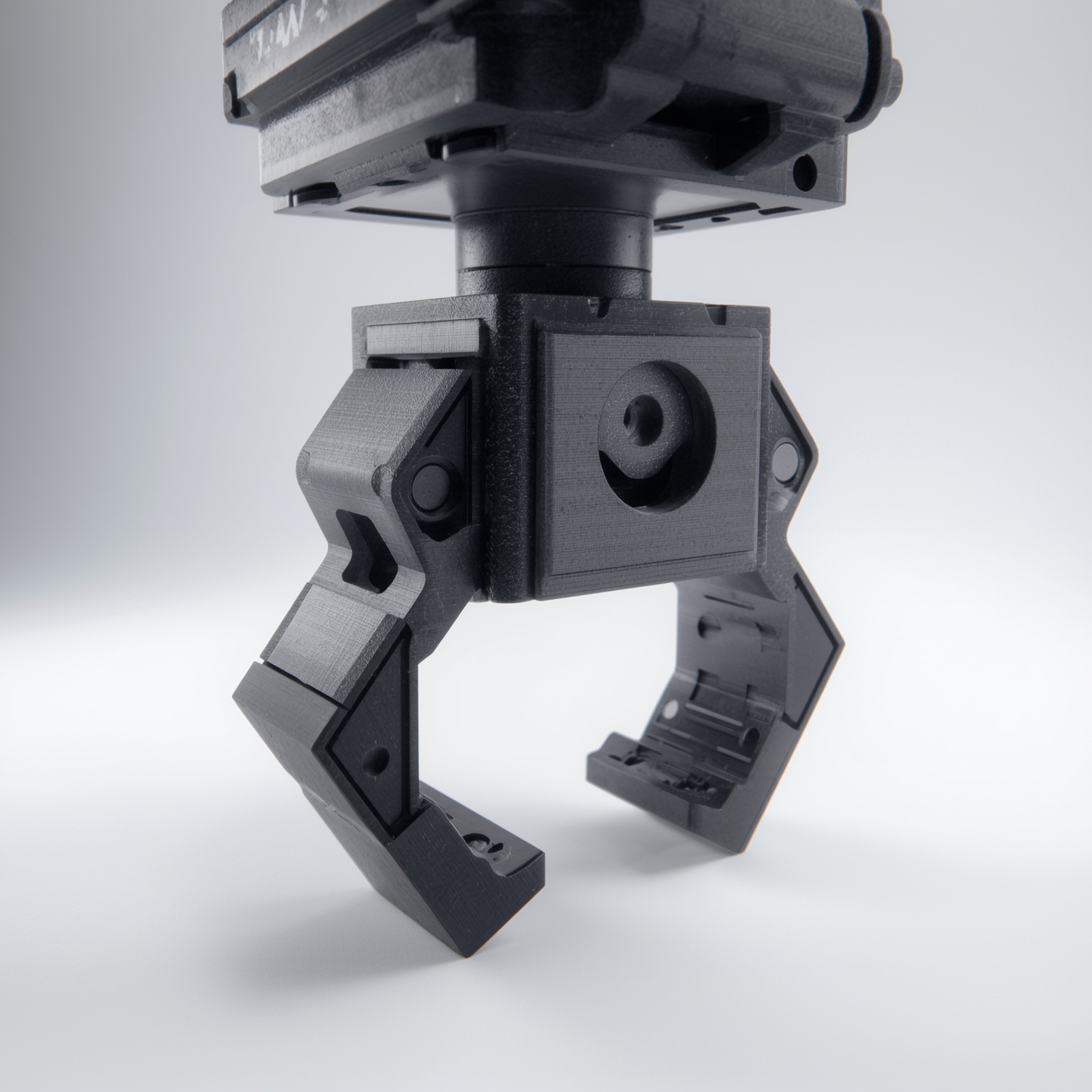
Capabilities and materials used in Aerospace & Defence
CNC Machining Services in Canada
Canadian CNC machining services for prototyping and production. 3-axis, 5-axis, turning, and milling from vetted Canadian manufacturers with CSA and ISO certification.
Composite Manufacturing Services in Canada
Canadian composite manufacturing services including carbon fibre layup, fibreglass moulding, and prepreg autoclave curing. Aerospace and industrial grade.
Finishing & Coating Services in Canada
Canadian finishing and coating services including anodizing, powder coating, plating, and cerakote. ISO-certified surface treatments from vetted providers.
Manufacturing intel.
Every Tuesday.
Real costs, vetted Canadian suppliers, and government funding alerts. One free email a week.
Unsubscribe anytime. Your data stays in Canada.