Best CNC Machining for Aerospace Parts in Canada
Compare CNC machining methods for aerospace parts in Canada. 5-axis milling vs turning vs EDM vs grinding - cost, lead time, quality, and top providers.
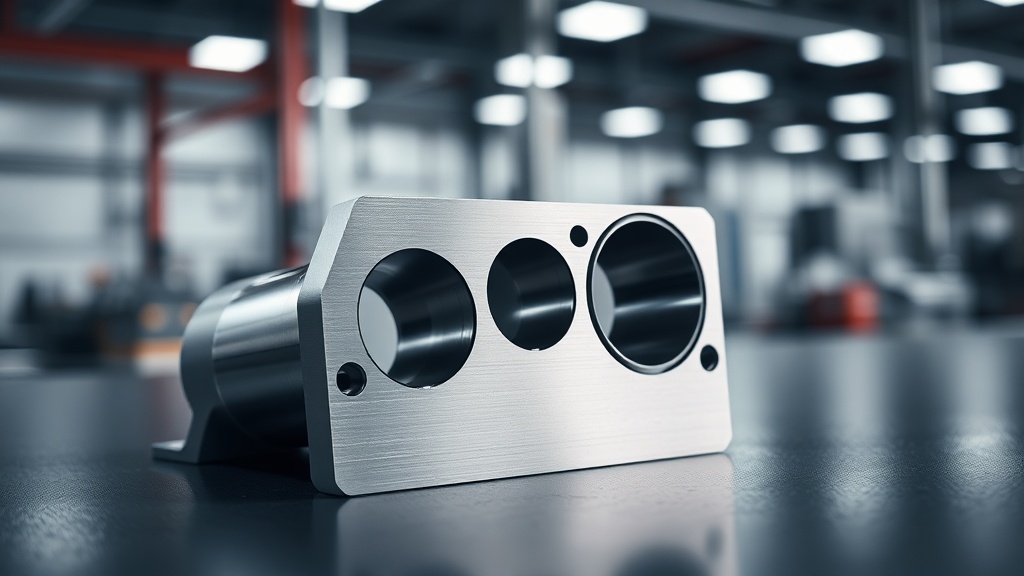
CNC Machining for Aerospace Parts: The Complete Guide
Aerospace CNC machining in Canada serves one of the world’s top five aerospace industries, with over 700 companies generating $32 billion in annual revenue. From titanium structural brackets to Inconel turbine components, Canadian machine shops produce flight-critical parts for Boeing, Airbus, Bombardier, Pratt & Whitney, and dozens of Tier 1 suppliers. The process demands extreme precision, certified quality systems, and full material traceability from billet to finished part.
5-axis CNC milling is the cornerstone of aerospace machining, enabling complex monolithic structures that replace multi-part assemblies. These single-piece components reduce weight, eliminate fasteners, and improve structural integrity - critical advantages in an industry where every gram and every potential failure point matters.
Why Canadian CNC Machining for Aerospace?
Canada’s aerospace machining ecosystem is concentrated in three main clusters: Montreal (commercial aviation, engines), Toronto/Mississauga (landing gear, structures), and Winnipeg (composite and metal structures). These clusters offer deep supply chains, experienced workforces, and proximity to major OEM facilities. Canadian machine shops also benefit from government programs like SADI and NRC IRAP that support technology investment, keeping equipment at the cutting edge.
Material Expertise That Matters
Aerospace machining is defined by its materials. Titanium, Inconel, Waspaloy, and other exotic alloys behave nothing like aluminum or steel under a cutter. Canadian aerospace shops invest heavily in the machine rigidity, coolant systems, tooling, and process knowledge required to efficiently machine these challenging materials while maintaining the surface integrity that fatigue-critical aerospace parts demand.
Comparison: CNC Machining Methods
| Method | Cost | Lead Time | Quality | Best For | Rating |
|---|---|---|---|---|---|
| 5-Axis CNC Milling | $100–$3,000/part | 5–15 days | ±0.005mm tolerances, complex contours, full AS9100 traceability | Structural brackets, turbine blisks, landing gear components, airframe parts | ★★★★★ |
| CNC Turning (Multi-Axis) | $50–$800/part | 3–10 days | Excellent roundness and concentricity, tight tolerances on rotational parts | Shaft assemblies, hydraulic fittings, actuator housings, fastener hardware | ★★★★★ |
| Wire EDM | $80–$1,500/part | 5–12 days | ±0.002mm achievable, no cutting forces, any conductive material | Turbine blade slots, fuel nozzle orifices, precision tooling, exotic alloys | ★★★★★ |
| CNC Grinding (Surface/Cylindrical) | $40–$600/part | 3–8 days | Sub-micron surface finish (Ra 0.1), extreme dimensional accuracy | Bearing surfaces, hydraulic spool valves, seal interfaces, gauge blocks | ★★★★★ |
When to Use Each Method
5-Axis CNC Milling
- Parts have complex 3D contours that require simultaneous 5-axis motion
- Titanium or Inconel structural parts need aggressive material removal
- Single-setup machining reduces tolerance stack-up on critical features
CNC Turning
- Rotational symmetry dominates the part geometry
- High-volume fastener or fitting production is needed
- Live tooling can complete milling features without a second setup
Wire EDM
- Hardened materials (Rc 60+) need precision cutting without heat-affected zones
- Narrow slots or small orifices cannot be reached by conventional cutters
CNC Grinding
- Surface finish below Ra 0.2 microns is specified
- Final dimensional accuracy on bearing or seal surfaces is critical
Top Canadian CNC Machining Providers
We're currently vetting cnc machining providers across Canada for aerospace parts. Join our waitlist to get matched with trusted suppliers when your spot opens.
Join the WaitlistFrequently Asked Questions
What certifications are required for aerospace CNC machining?
Why is 5-axis machining preferred for aerospace parts?
How do Canadian aerospace machine shops handle titanium?
What is the typical lead time for aerospace CNC parts in Canada?
Get a CNC Machining Quote for Aerospace Parts
Compare cnc machining options for aerospace parts and get matched with the right Canadian manufacturer. Join our waitlist to get started.
Or email us at hello@theassemblystudio.com
Manufacturing intel.
Every Tuesday.
Real costs, vetted Canadian suppliers, and government funding alerts. One free email a week.
Unsubscribe anytime. Your data stays in Canada.